
Reviewed · WORKSHOPS
Batik Coloring Workshop by myBatik
Batik feels instantly personal in Kuala Lumpur, especially when you paint on pre-waxed fabric and watch patterns stay crisp. I love how the class teaches the wax-resist method in a way that feels practical, not complicated. You also get to choose your own colors, so it stops being a passive demo and becomes something you actually make.
Two things I especially like: you leave with a real souvenir you can hang, frame, or gift, and the workshop is family-friendly and hands-on. The guidance is patient, and in one recent class I can point to, the instructor Emilia was described as warm and funny, with extra patience for photos and memory-making. The only real drawback is timing, the day runs only 8am to 3pm and workshop last call is 1pm, so you should plan your day around that.
Also note that food and drinks are not included, so you’ll want to budget a little extra if you plan to eat at the café afterward.
In This Review
- Key Highlights You Should Know Before You Go
- Why This Batik Coloring Workshop Works So Well in Kuala Lumpur
- Getting Oriented: Meeting Point Near the Twin Towers Area
- The Wax-Resist Process: What Happens During Class
- Choosing Your Design and Colors Without Stress
- Your Take-Home Batik: The 20cm Square Souvenir
- What to Do Nearby Right After the Workshop
- Timing, Group Size, and When to Book
- Price and Value: Is $16 a Fair Deal for Batik?
- Practical Tips So Your Workshop Goes Smoothly
- Who Should Book This Batik Coloring Experience?
- Should You Book MyBatik’s Batik Coloring Workshop in Kuala Lumpur?
- FAQ
- How long is the batik coloring workshop in Kuala Lumpur?
- What is included in the ticket price?
- Do I need to bring anything or pay extra for supplies?
- Can children participate?
- What are the hours, and what is the workshop last call?
- Is food and drinks included?
- Can I take my batik home?
- Is this activity private for my group?
- Where does the tour start and end?
Key Highlights You Should Know Before You Go
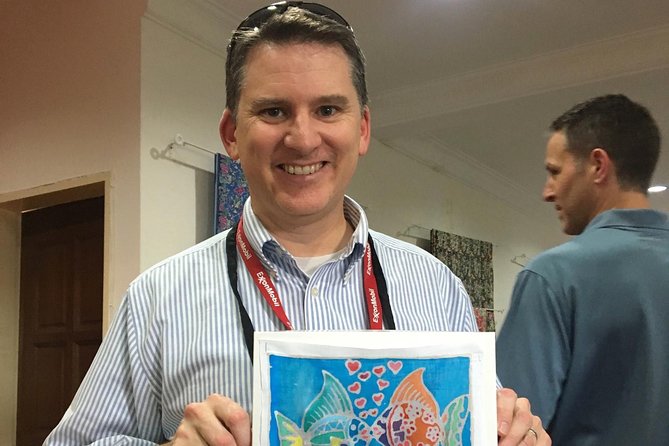
- A short, focused session: about 30 to 40 minutes, often described as around 45 minutes, with classes running through the day.
- Pre-waxed fabric, guided start-to-finish: you start with an undyed cloth already pre-waxed with a pattern.
- Color choices plus simple mixing: you can fill in designs or practice mixing primary colors into secondary hues.
- Take-home batik in a neat size: a square cloth about 7.8 inches (20 cm) across.
- Private group setup: only your group participates, which makes it easier with kids or mixed skill levels.
Why This Batik Coloring Workshop Works So Well in Kuala Lumpur
If you want one cultural activity that is hands-on and not exhausting, this is a strong pick. Batik is one of Malaysia’s most recognizable arts, and you get to learn the process instead of just watching someone else do it. The result is small, doable, and meaningful, which is exactly what I look for in a short city activity.
The biggest win is that the technique does part of the work for you. In wax-resist batik, the wax helps protect certain areas so the design shows up with sharp boundaries. That means you can focus on color and pattern choices rather than trying to invent the design from scratch.
It also fits real travel life. You’re in Kuala Lumpur, where your days can fill up fast with sights. A half-hour to under-an-hour workshop gives you a cultural reset without eating your whole afternoon.
More of Kuala Lumpur worth an open tab:
- Private Half-Day Batu Caves and Cutural Tour in Kuala Lumpur
★ 5.0 · 3,107 reviews - Sambal Streets Kuala Lumpur Food Tour with 15+ Tastings
★ 5.0 · 2,438 reviews - Historical Malacca Guided Day Tour (Shared Tour)
★ 5.0 · 2,172 reviews
Getting Oriented: Meeting Point Near the Twin Towers Area
You’ll meet at Embun/Emery @ Kemensah, Jln Tiara Kemensah 3, 68000 Ampang, Selangor. From there, you’ll go to the Batik Workshop Center, described as a short distance from Kuala Lumpur Twin Towers, downtown attractions, and transport.
Why I care about this for your planning: Kuala Lumpur traffic and routing can make “near the sights” feel very different depending on the hour. Having a clear meeting point and being near public transportation gives you options. You also get a mobile ticket, so you can keep it simple on your phone.
If you’re building a day around the class, aim to arrive early rather than sprinting in right at the last minute. Workshop last call is 1pm, which is a hard stop for that day’s sessions.
The Wax-Resist Process: What Happens During Class
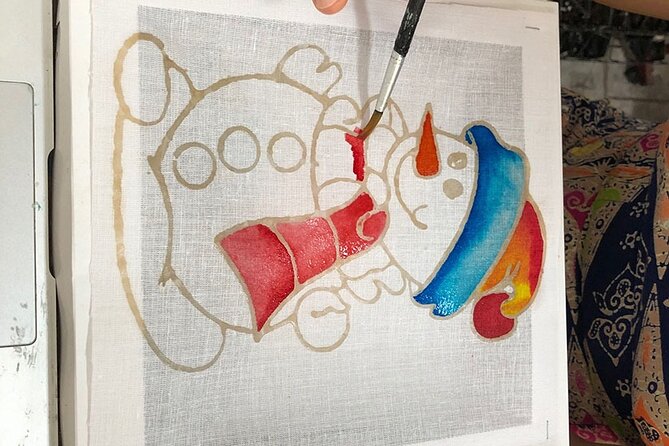
The workshop is designed to take you through the batik-making steps, start to finish, within a single session. First, you work with a piece of undyed fabric that’s already pre-waxed with a pattern. That’s important, because it means you’re not measuring, carving, or preparing wax from scratch.
Next comes the fun part, choosing your colors and filling in the design. You’ll learn the basics of painting batik and follow the process as you go. Malaysian batiks use a technique called wax-resist dying that’s been practiced in Southeast Asia for hundreds of years, but the workshop focuses on what makes Malaysian batik feel distinct through its color and pattern choices.
There’s also flexibility built in. You can stick to the design as-is and color it in, or you can practice mixing primary colors into secondary hues. That’s a nice option if you want your final cloth to look more custom, not just filled.
In at least one recent class, the instructor experience stood out for patience, and that matters here. Wax-resist work is all about careful placement, so having an instructor who is willing to slow down and help you correct small missteps makes the whole session better.
Choosing Your Design and Colors Without Stress
A lot of art classes fail because they give you a blank page and wish you luck. This workshop avoids that. You start with fabric that already has a waxed pattern, so you can jump straight into coloring.
You’ll have a variety of different designs to choose from. You can select based on what you like visually, but also based on how much detail you want to work with. If you’re traveling with kids or you’re a first-timer, going with a simpler pattern can help you finish with confidence.
Color choice is where you can make the batik feel truly yours. You’re not limited to one palette, and you can ask for guidance if you want specific shades. If you want a little extra challenge, practicing primary-to-secondary mixing is a great way to get more skill out of a short timeframe.
And yes, it’s family-friendly. The process is structured, but your role is active. That balance is a big reason people seem to love walking away with something they made themselves.
A different sort of day out in Malaysia:
- Kuala Lumpur: Sambal Street Food Tour with 15+ Tastings
★ 4.9 · 1,657 reviews - From Kuala Lumpur: Batu Caves Cultural Temple Tour
★ 4.7 · 1,453 reviews - Genting Highland & Batu Cave Guided Day Tour (SIC/Shared Tour)
★ 5.0 · 1,289 reviews - Kuala Lumpur: Petronas Twin Towers Entry E-Ticket
★ 4.6 · 1,229 reviews
Your Take-Home Batik: The 20cm Square Souvenir
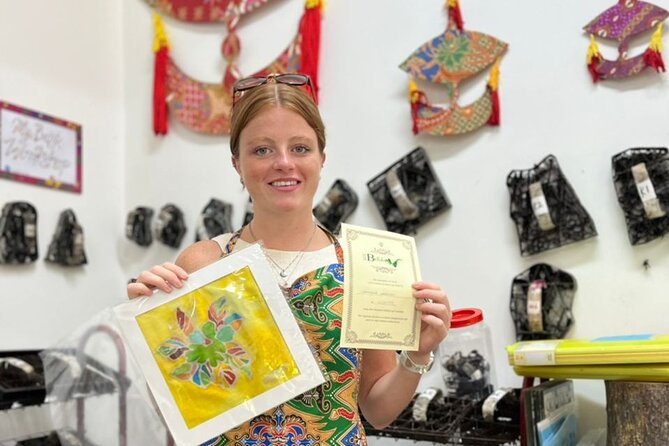
This is not a “watch for an hour and get a certificate” situation. You may take home your creation: a square cloth about 7.8 inches (20 cm) across.
For value, the size is practical. It’s big enough to be meaningful, but small enough to pack without turning your bag into a project. If you’re thinking about gift-giving, 20 cm is also a comfortable scale for a travel souvenir.
What I recommend you do at the end: confirm exactly how they want you to carry or handle the cloth after the workshop. The data I have doesn’t spell out care instructions after completion, so your best bet is to ask the staff while you’re still there. That way, you’ll avoid guessing.
What to Do Nearby Right After the Workshop
Once your class wraps up, you get access to a nearby garden café and batik gallery. This is a smart add-on because it turns the workshop into a mini cultural block instead of a single stop-and-go activity.
Plan on an easy break. The café is close, and it’s a good spot to regroup, snap a few photos, and look at other batik styles in the gallery. Food and drinks are not included, but the café reportedly offers coffee and tea plus all-day breakfast, lunch, and tea time, so you’re not limited to just snacks.
If you want to stretch your day, the gallery is the kind of place that helps you notice what you made. You’ll start seeing design choices in a new light, and it makes the whole activity feel more connected to Malaysian culture.
Timing, Group Size, and When to Book
Classes are available throughout the day, and the site is open 8am to 3pm daily, including public holidays. Workshop last call is 1pm, so if you want a specific session window, don’t treat this as a walk-in-only activity.
This is also a private tour or activity, meaning only your group participates. That’s a big deal in a workshop setting. If you’re traveling with kids, a private setup reduces waiting and distractions. If you’re a couple or solo traveler, you’re less likely to feel rushed.
Price matters too. The workshop costs $16.00 per person, and it’s commonly booked about 41 days in advance on average. That timing suggests popularity, especially for families and cultural planners, so booking ahead is a good habit.
Price and Value: Is $16 a Fair Deal for Batik?
At $16 per person, the value is strong for one clear reason: the class includes all materials and tools needed, and it has no hidden cost during the workshop. Local taxes are also included.
That means you’re not paying extra for the “real” stuff. Some tours feel cheap until you add supplies, add-on fees, or small charges that pop up at the counter. Here, the main cost is the workshop itself, and the materials are part of what you’re buying.
You also get a take-home item, a 20 cm square cloth that reflects your choices. For souvenir buyers, that’s important. You’re not just buying the experience, you’re buying the tangible result.
Add in the private group format, and the price becomes even more reasonable for people who would otherwise need to hunt down a studio, supplies, and instruction on their own.
Practical Tips So Your Workshop Goes Smoothly
Here are a few things I’d do to set myself up for an easy, satisfying class.
- Go before lunch if you can. Last call is 1pm, so earlier booking reduces stress.
- Wear clothes you’re comfortable getting dye-related stains on, even if the staff may manage materials carefully.
- Bring your camera phone, and be ready to ask the instructor to help you capture a couple of steps. The class is hands-on, and photos help you remember the process.
- If you’re traveling with kids, plan on adult supervision throughout. Children aged 7 and above must be accompanied by an adult.
- If you want secondary colors, decide early whether you’d rather practice mixing or focus on coloring a specific design.
One more small thing: you can accept cash and credit cards (Visa, Master, Amex) at the venue area, which is helpful if you’re budgeting your day on the spot.
Who Should Book This Batik Coloring Experience?
I’d book it if you want a cultural activity that is short, structured, and creative. It’s especially good for:
- Families with kids 7 and older who want a hands-on craft
- First-time visitors who want Malaysian art explained without a long course
- Couples looking for a meaningful souvenir they can actually make together
- Anyone who enjoys guided art, but doesn’t want to spend a whole half-day in a studio
I’d be a bit more cautious if you’re the type who wants a longer, deeper course. This is intentionally brief. You’ll learn the basics and produce a take-home result, but it’s not meant to replace multi-session art training.
Should You Book MyBatik’s Batik Coloring Workshop in Kuala Lumpur?
Yes, if you want a fast, real-world cultural experience with a take-home souvenir. I like that the class includes everything you need, that it’s private, and that it’s designed for beginners and families. The format also makes it easy to fit into a Kuala Lumpur day without wrecking your schedule.
Book it when your plan has room for the 8am to 3pm window, and aim comfortably before the 1pm last call. If you’re already thinking about a batik craft souvenir, this is a direct way to earn it instead of shopping from a shelf.
If you’re uncertain, use this simple test: would you enjoy painting and choosing colors for 30 to 40 minutes? If yes, you’ll probably be happy you booked.
FAQ
How long is the batik coloring workshop in Kuala Lumpur?
The workshop runs about 30 to 40 minutes (and it’s also described as a 45-minute hands-on session).
What is included in the ticket price?
All materials and the tools used during the workshop are included, and local taxes are included too.
Do I need to bring anything or pay extra for supplies?
No. The workshop fee includes the related tools and materials needed during the class, with no hidden costs during the workshop.
Can children participate?
Children aged 7 and above must be accompanied by an adult.
What are the hours, and what is the workshop last call?
The site is open from 8am to 3pm daily. Workshop last call is 1pm.
Is food and drinks included?
No, food and drinks are not included.
Can I take my batik home?
Yes. You may take home your creation, a square cloth that’s about 7.8 inches (20 cm) across.
Is this activity private for my group?
Yes. It’s a private tour or activity, and only your group will participate.
Where does the tour start and end?
It starts at Embun/Emery @ Kemensah, Jln Tiara Kemensah 3, 68000 Ampang, Selangor, Malaysia, and it ends back at the meeting point.
Just published around Kuala Lumpur
- Sunway Lagoon Ticket (One Day Pass)★ 3.5 · 5 reviews
- Kuala Lumpur City & Batu Caves Temple Private Tour★ 4.5 · 3 reviews
- Private Transfer: Kuala Lumpur International Airport to or from Hotel★ 4.5 · 14 reviews
- Private Tour Kuala Lumpur Shore Excursion Include Batu Caves★ 5.0 · 29 reviews
- Private Kuala Lumpur Shore Excursions★ 4.5 · 22 reviews
- Genting SkyWorlds Theme Park Tickets (Optional)★ 5.0 · 5 reviews
- Private Chauffeur For Meetings, Side Visit, Tours, Airport Transfer, Sightseeing★ 5.0 · 13 reviews
- Private Airport Transfer★ 5.0 · 4 reviews
Workshops, compared.
Penang Cooking Class:Dive into Malaysian Cuisine with PenangChiak
Read our review →
Chef Samuel’s Private Malaysian Cooking Class with Wet Market Tour
Read our review →
New Malaysian Kitchen Cooking Class and Garden Tour
Read our review →
Market Visit & Private Hands-on Cooking Class at Daun Senja
Read our review →
Sabah Traditional Authentic Cuisine Cooking Class 3 Hours
Read our review →Browse the lists this tour appears in