
Reviewed · CULTURAL VILLAGE TOURS
Mari Mari Cultural Village Tour from Kota Kinabalu
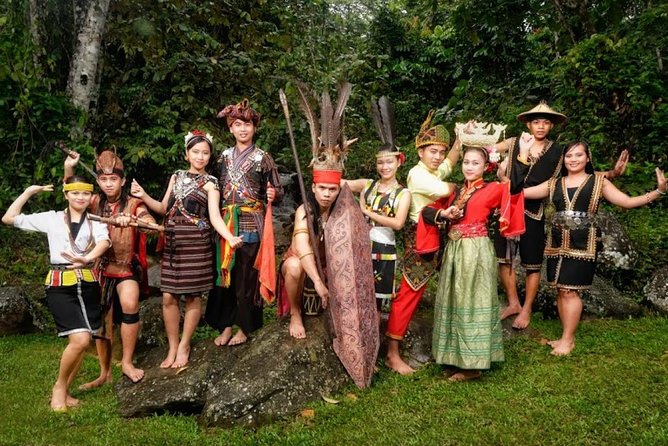
Five tribes, one day, zero guesswork. Mari Mari Cultural Village is a hands-on way to understand Sabah’s Indigenous cultures, with a chief-led welcome and daily demonstrations that show traditional skills. Add in the fact that you are picked up and dropped off in Kota Kinabalu, and you get more time watching, less time planning.
I especially like two things about this tour. First, you’re guided by an English-speaking guide who can explain the cultures of five groups clearly. Second, the visit is structured for real value: lunch plus admission are included, so you are not hunting for meals or tickets partway through the day.
One consideration: the pricing can change during peak periods. There’s a 30% surcharge for super peak or festive dates paid on the day of travel, and hotels outside the standard pickup zone may cost extra.
In This Review
- Key highlights worth your time
- Mari Mari Cultural Village: five Sabah peoples in one half-day
- Price and what you actually get for $145.43
- Kota Kinabalu pickup and the ride to Inanam
- Welcome ceremony, village rules, and the chief greeting
- Walking the suspension bridge and meeting the five ethnic groups
- Fire-starting and blowpipe-making demonstrations (and how to watch)
- The dance performances: colorful and easier to remember than facts
- Lunch inside the village, plus a realistic break in the day
- Who this tour suits best in Sabah
- Tips, timing, and the small gotchas
- Should you book this Mari Mari Cultural Village tour?
- FAQ
- How long is the Mari Mari Cultural Village tour from Kota Kinabalu?
- Where do I get picked up and where do I get dropped off?
- Is lunch included?
- Does the price include admission to the cultural village?
- Is there an English-speaking guide?
- What is the maximum group size?
- Which ethnicities are featured during the visit?
- What demonstrations are included?
- Are there any extra charges besides the listed price?
- What should I bring or wear?
Key highlights worth your time
- Small group (max 15 people) for a less rushed, more personal experience
- Chief welcome ceremony and a clear intro to village rules before you walk in
- Five ethnic groups in one place: Dusun, Rungus, Murut, Bajau, and Lundayeh
- Traditional demonstrations like fire-starting and blowpipe-making
- Colorful dance performances that help tie stories to real culture
- Included hotel pickup and drop-off plus lunch inside the village
Mari Mari Cultural Village: five Sabah peoples in one half-day
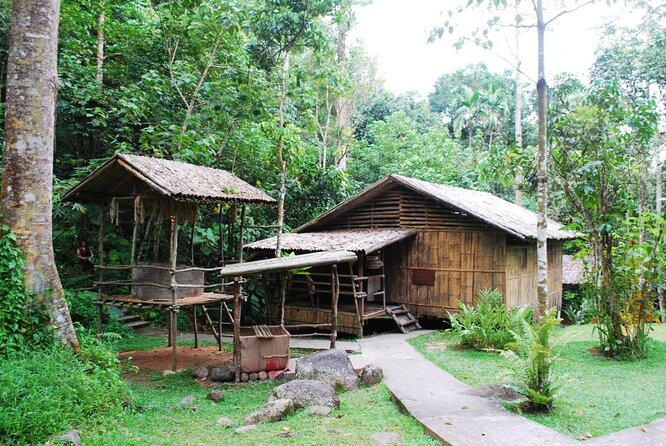
Mari Mari Cultural Village is built around one big idea: Sabah’s Indigenous cultures are best understood through direct experience, not just photos. The day trip runs about 5 hours, with hotel pickup in Kota Kinabalu and a guided visit deep enough to feel like more than a quick stop.
You come in expecting a cultural show, but the flow is closer to a guided walk through community life. You start with a welcome ceremony, then move through village areas connected to different ethnic stories. You also get a program of demonstrations, including hands-on craft and survival-style skills like fire-starting and blowpipe-making.
This is also a good “first exposure” tour. It does not require you to know anything ahead of time, and the guide’s job is to help you connect what you see to the people behind it.
More Cultural Village Tours in Kota Kinabalu
- Kota Kinabalu: Mari Mari Cultural Village Tour with Lunch
★ 5.0 · 152 reviews - Mari-Mari Cultural Village Tour Including Lunch
★ 4.5 · 45 reviews - Sabah: Mari-Mari Cultural Village Visit + Lunch + transfer
★ 4.5 · 16 reviews
Price and what you actually get for $145.43
At $145.43 per person, this is not the cheapest thing you can do from Kota Kinabalu. But you do get a lot inside that price. The biggest value points for me are the items that stop your day from falling apart: pickup and drop-off, an admission ticket, and lunch.
Here is what your money buys:
- Hotel (or cruise terminal) pickup and drop-off
- English-speaking guide
- Air-conditioned vehicle
- Admission to Mari Mari Cultural Village
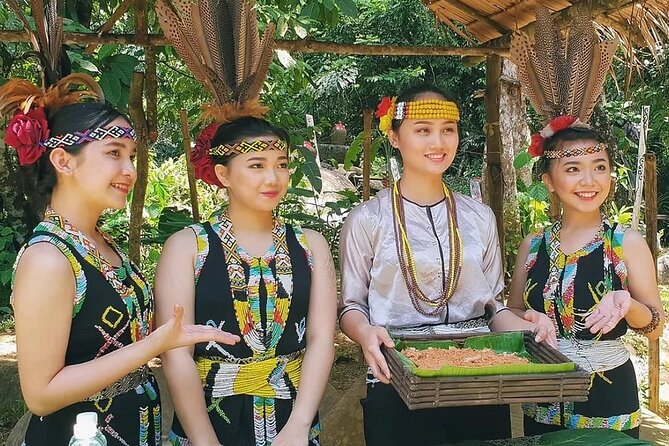
- Lunch served inside the village
That combination matters because cultural village tours can easily become a patchwork day: transport costs add up, then food becomes another expense, then admission turns into surprise fees. This one stays tidy.
Do watch for two add-ons. During super peak or festive season, there’s a 30% surcharge paid on the day of travel. And if your hotel is listed as a Borneo Hotels outskirt or a 1 Borneo hotel, there’s an additional USD 9 per person. Those do not ruin the value, but they can change the real cost.
Kota Kinabalu pickup and the ride to Inanam
Your day starts with a pickup from your hotel in Kota Kinabalu. The schedule lists pickup around 0900 or 1400, and the tour runs for about 5 hours total. Either way, you’re doing this as a proper half-day outing instead of a complicated self-arranged trip.
The drive to the village area (Inanam) is commonly described as around 40 minutes. That’s helpful because it keeps the day from shrinking into transport time. If you hate long car rides, this is one of the better options for a cultural trip that still feels full.
You also ride in an air-conditioned vehicle, and the tour operates with a limited group size (up to 15). That matters because smaller groups tend to keep everyone on schedule when you have a short arrival window for the welcome ceremony and performances.
Welcome ceremony, village rules, and the chief greeting
When you arrive, there’s a built-in transition moment. You are greeted as if you are stepping back into prehistoric Borneo, and before you wander, you go through village rules. I like this part because it sets expectations. It helps you avoid the awkward feeling of being an outsider who does not know how to behave.
Then comes the welcome ceremony, including a greeting by the chief. This is more than theater. It signals that the village is organized around cultural presentation and community respect, not just tourism.
Practical tip: this is the time to listen closely. The rules and intro set you up to enjoy everything that follows, from the way areas are structured to how demonstrations are explained.
A different sort of day out in Malaysia:
- 2D1N Mount Kinabalu Climbing
★ 5.0 · 494 reviews - Bongawan River Cruise: Proboscis Monkey & Fireflies Mangrove
★ 4.8 · 437 reviews - Guided Snorkeling Day Trip, Kota Kinabalu, Sabah, Malaysia
★ 5.0 · 282 reviews - Borneo (Klias) River Cruise & Fireflies Tour
★ 4.5 · 126 reviews
Walking the suspension bridge and meeting the five ethnic groups
One of the most memorable physical moments is crossing the suspension bridge to enter Mari Mari Cultural Village. Even if you are not a “photo person,” it helps you understand that the village layout is meant to be walked, not just viewed from one spot.
Inside, you encounter a cultural setup representing five ethnic groups: Dusun, Rungus, Murut, Bajau, and Lundayeh. Each group is presented with its own stories, traditional dances, and historical context. The point is not to force a checklist of facts. It is to show how different communities shaped life in Sabah, from daily survival skills to celebrations.
A big plus here is variety. Instead of one culture repeated over and over, you get a sequence of different perspectives. That keeps your brain engaged and helps you compare what is similar and what is different across the communities.
Fire-starting and blowpipe-making demonstrations (and how to watch)
The tour includes traditional demonstrations such as fire-starting and blowpipe-making. This is where the experience feels most grounded. You are not just watching costumes move, you are seeing practical skills that connect to how people lived.
How to watch so it clicks:
- Pay attention to what the guide explains before you think about filming.
- Notice the materials and steps, even if they are simplified for presentation.
- Ask questions if your guide invites them, especially about what the skills were used for.
These demonstrations can be the difference between a “show” and a real understanding of culture. A dance performance is fun, but a survival craft show tells you why traditions mattered beyond ceremonies.
The dance performances: colorful and easier to remember than facts
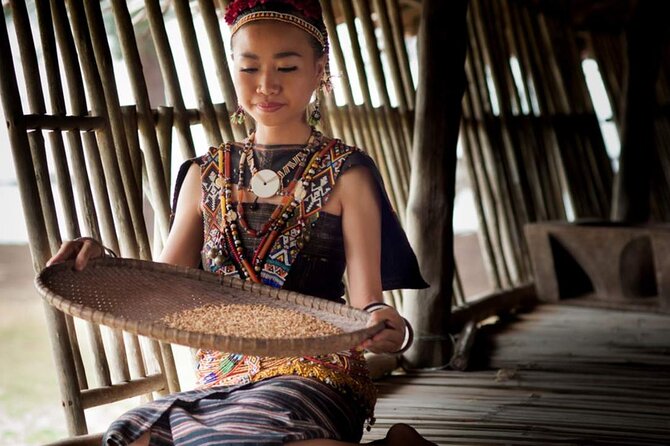
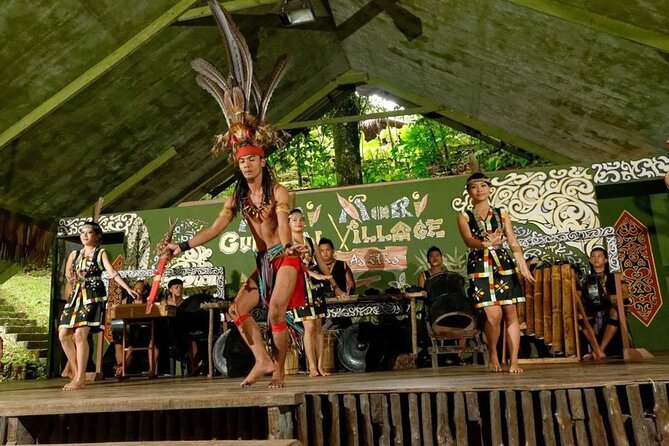
After the daytime learning, you get a traditional dance component. The performance is described as colorful and entertaining, and that fits the logic of cultural storytelling. Movement, music, and costume help you remember what you heard earlier.
This part also tends to land well for families and first-time visitors. Kids may not follow every historical detail, but they often remember rhythm, expressions, and how performers interact with the space. Adults tend to like that the dance gives structure to the stories you receive around each ethnic group.
If you want to maximize this segment, give yourself permission to enjoy it as performance while still watching for the meaning your guide ties to it.
Lunch inside the village, plus a realistic break in the day
Lunch is included and served inside Mari Mari Cultural Village. That sounds simple, but it is a real quality-of-life win on a day trip. You avoid the common problem of having to leave the site to eat, then rush back before the next scheduled activity.
The food is described as very good in feedback, which is always reassuring for tours like this where meals can sometimes feel like an afterthought. Here, lunch is built into the flow, so you get a proper pause before you head back toward modern life and your return transfer.
If you have dietary needs, the tour details provided here do not spell out options. I’d treat that as a good reason to confirm with the operator before you go, especially if you have strict requirements.
Who this tour suits best in Sabah
This tour is a good match for:
- Families who want an easy cultural day without planning transport
- First-time visitors to Sabah and Kota Kinabalu looking for an intro to local Indigenous cultures
- People who prefer small groups (max 15) and an English-speaking guide
- Travelers who like hands-on or skill-based cultural demonstrations, not only performances
It also makes sense if you want a “scenic-relief” day. The route is short enough that you are not trapped in transit for hours, but the experience still feels like a real destination.
If you are the type who wants independent exploration with no structure, you might find the guided pace limiting. But if you want clarity, context, and a smooth day, this is built for you.
Tips, timing, and the small gotchas
A few practical notes can help you get the most out of the visit:
- Wear comfortable walking shoes. The village is presented as a walk-through environment, and you may be on your feet more than you expect.
- Bring a cap or hat. Sabah sun can be intense even when the day feels short.
- Pack a little extra pocket money, just in case you want to buy something on-site. The details list extra pocket money as something to bring.
- Expect casual dress. The tour guide briefing and village environment are straightforward, and you are not going somewhere formal.
- Plan around pickup timing. The tour lists pickups around 0900 or 1400. If you have other plans that same day, give yourself breathing room.
Two cost-related gotchas to keep on your radar:
- 30% surcharge during super peak or festive season, paid on the day of travel
- USD 9 per person added for 1 Borneo hotels and outskirt hotels pickup and drop-off
Finally, the tour requires a minimum of 4 travelers. If the minimum is not met, the operator can cancel, or offer an alternative date or experience.
Should you book this Mari Mari Cultural Village tour?
I think you should book if you want a structured, easy way to learn about Sabah’s Indigenous cultures in one half-day trip from Kota Kinabalu. The strongest reasons are practical: included pickup and drop-off, English-speaking guiding, lunch, and admission, plus the memorable combination of welcome ceremony, demonstrations, and dance.
Skip it or consider alternatives if price surprises would stress you out, since the festive-season surcharge can change the total cost. Also, if you hate guided group pacing, or you prefer fully independent travel, this kind of cultural village format may not feel flexible enough.
If you do book, go in with the mindset of being a respectful learner. Follow the village rules at the start, watch the demonstrations with patience, and let the performances help you connect the stories you hear. That is when this tour feels like more than a stop on a schedule.
FAQ
How long is the Mari Mari Cultural Village tour from Kota Kinabalu?
The tour lasts about 5 hours.
Where do I get picked up and where do I get dropped off?
You get pickup from your hotel (or cruise terminal) and return drop-off to your hotel in Kota Kinabalu. You should select the correct pickup point during booking.
Is lunch included?
Yes. Lunch is included and served inside Mari Mari Cultural Village.
Does the price include admission to the cultural village?
Yes. Admission to Mari Mari Cultural Village is included.
Is there an English-speaking guide?
Yes. The tour includes an English-speaking guide.
What is the maximum group size?
The tour has a maximum of 15 travelers.
Which ethnicities are featured during the visit?
The cultural village includes five ethnic groups: Dusun, Rungus, Murut, Bajau, and Lundayeh.
What demonstrations are included?
The experience includes traditional demonstrations such as fire-starting and blowpipe-making.
Are there any extra charges besides the listed price?
Yes. There is a 30% surcharge during super peak or festive season, and there may be an additional USD 9 per person for 1 Borneo hotels and outskirt hotels pickup and drop-off.
What should I bring or wear?
Bring a cap or hat and wear comfortable walking shoes. Casual wear is recommended, and you may also want to bring extra pocket money.
Just published around Kota Kinabalu
- Sabah: White Water Rafting Grade 3-4 at Padas River★ 4.7 · 3 reviews
- Full-Day Sepilok Orangutan and Sandakan City Trail from Kota Kinabalu★ 4.0 · 6 reviews
- Island Hopping ( Manukan & Sapi Island ) From Kota Kinabalu★ 4.5 · 9 reviews
- Sunset E-Foil Experience in Tanjung Aru Beach★ 5.0 · 10 reviews
- Top of the World – Sunrise Leisure Hike St. Veronica Hill★ 5.0 · 8 reviews
- Padas River White Water Rafting from Kota Kinabalu (Grade 3 & 4)★ 3.5 · 4 reviews
- Monsopiad Cultural Village Visit with Private Transfer from Kota Kinabalu★ 4.5 · 5 reviews
- Mangrove Kayaking Experience in Borneo★ 5.0 · 8 reviews
Cultural Village Tours, compared.
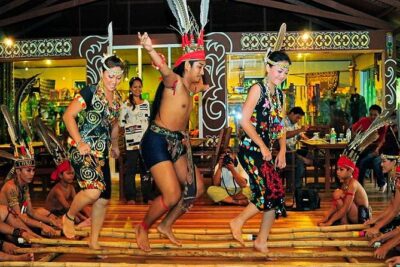

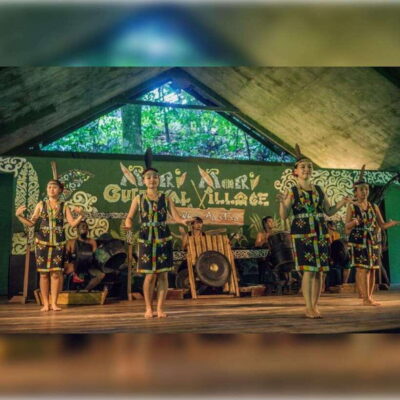
Mari-Mari Cultural Village Visit + Lunch + transfer
Read our review →
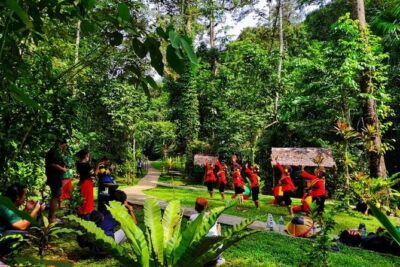
Semenggoh Orangutan Center & Sarawak Cultural Village
Read our review →Browse the lists this tour appears in