
Reviewed · CULTURAL VILLAGE TOURS
Kota Kinabalu: Mari Mari Cultural Village Tour with Lunch
Blowpipe lessons beat museum hours. At Mari Mari Cultural Village near Kota Kinabalu, you walk through the rainforest to see daily life of Sabah tribes, with hands-on demos like fire-making and bamboo cooking. The best part is how your guide ties each activity to real people, real meaning, and real stories.
I also like the end-to-end flow, house to house, with games and food that actually get your hands involved. The traditional lunch is a genuine highlight, not a rushed add-on, and a few guests noted clear ingredient labeling for dietary needs.
One thing to plan for: it is outdoors, so you will feel rain, sun, and mosquitoes at times. Bring repellent and a light rain layer, and expect to walk between spots.
In This Review
- Key highlights
- From Kota Kinabalu pickup to the village gate
- The rainforest setting, and how the village experience works
- Bajau House: Congkak and Kuih Jala in practical form
- Dusun House: bamboo cooking over open fire
- Rungus House: tree bark textiles and craft time
- Murut House: Lansaran, hena drawing, and the blowpipe connection
- Fire-making and blowpipe hunting: the hands-on part people remember
- The dance finale: where participation actually happens
- Lunch in the village: what you can expect from a traditional meal
- Timing, pacing, and what to wear in Sabah humidity
- Does the $67 price make sense for what you get?
- Who should book this tour, and who might not love it
- Should you book Mari Mari Cultural Village with Lunch?
- FAQ
- How long is the Mari Mari Cultural Village tour?
- Where are the pickup and drop-off locations in Kota Kinabalu?
- How long is the visit inside Mari Mari Cultural Village?
- Which activities are included?
- Are there cultural performances during the tour?
- What lunch is included?
- What languages does the guide speak?
- Is transportation included?
- Is there free cancellation?
- Can the tour accommodate gluten-free or dietary restrictions?
Key highlights
- Five Sabah tribe houses in one guided afternoon with photo stops and a paced route
- Hands-on fire-making and blowpipe hunting practice you can try yourself
- Bajau House games and snack demos including Congkak and Kuih Jala
- Dusun bamboo cooking over open fire using traditional methods
- Murut traditions you can watch and join, including Lansaran and hena drawing
- Traditional dance finale where you can join the dancing, plus a satisfying local lunch
From Kota Kinabalu pickup to the village gate
This is a straightforward half-day plan built for comfort and timing. Your tour starts with pickup at either The Shore area or Citadines Waterfront Kota Kinabalu, and you meet the guide at Burger King in the same building next to the convenience store called Orange. The van ride to the village is about 20 minutes, so you are not stuck in transit all afternoon.
On the drive, guides often set the context. Many guests specifically praised guides named Eddie and Timmy for sharing Sabah history and practical cultural background before you even reach the houses. That matters because once you’re standing in front of a traditional home, you can understand what you’re looking at, not just take photos and move on.
If you have dietary restrictions or allergies, this is also a smart moment to mention them. At least one guest reported that the guide asked about food needs and then helped find suitable options at lunch.
More Cultural Village Tours in Kota Kinabalu
- Mari-Mari Cultural Village Tour Including Lunch
★ 4.5 · 45 reviews - Sabah: Mari-Mari Cultural Village Visit + Lunch + transfer
★ 4.5 · 16 reviews - Mari Mari Cultural Village
★ 4.5 · 11 reviews
The rainforest setting, and how the village experience works
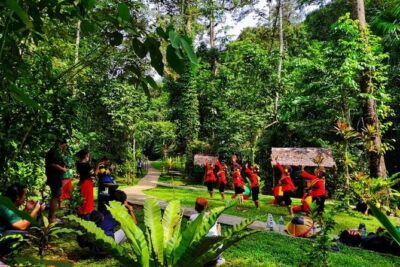
Mari Mari is set in a rainforest environment, so the mood is different from a city museum. You start with a warm welcome, then head along paths to traditional homes. The pace is active, but it stays structured, with guided stops and short interactive moments so you do not feel lost in the greenery.
A big part of why this works is the format: you are not only watching, you’re participating. You will get hands-on practice with a few traditional skills, then finish with cultural performances and dancing. Think of it as a living cultural village built to explain, demonstrate, and invite participation.
The tradeoff is that it is still a managed show environment. If you want long, quiet conversations with elders or an unstructured day of observation, you might find the schedule too timed. For most people, though, that structure is exactly what makes it a good value.
Bajau House: Congkak and Kuih Jala in practical form
One stop you should look forward to is the Bajau House. Here, you can try Congkak, a traditional counting game that builds concentration fast, even if you’ve never played before. It’s not just entertainment either. When you do the movements yourself, you understand why these games were important social activities.
You also get to see how Kuih Jala is made. That matters because Kuih Jala is one of those snacks that sounds simple until you watch the technique. Even if you don’t remember every step, you walk away with a clearer idea of local food craft.
Practical tip: take a few minutes at the start to ask your guide what to watch for. The demos move at a steady pace, and a quick reminder of what’s important helps you catch the details you’d otherwise miss.
Dusun House: bamboo cooking over open fire
At the Dusun House, the focus shifts from games and snacks to food technique. You’ll see bamboo cooking, an old method of preparing meals over an open fire. The bamboo part is what catches your eye first, but the bigger story is how the method fits local cooking conditions and local ingredients.
This stop tends to land well because it’s visual and physical. You can watch the process, understand why open-fire cooking works in this environment, and ask questions while the demo is happening. It’s also a good reset before the more active fire-making and blowpipe parts later.
If you’re a bit picky about scents and smoke, know that open-fire cooking can be strong. That said, it is part of the authentic feel, and it’s brief enough that most people handle it easily.
A different sort of day out in Malaysia:
- 2D1N Mount Kinabalu Climbing
★ 5.0 · 494 reviews - Bongawan River Cruise: Proboscis Monkey & Fireflies Mangrove
★ 4.8 · 437 reviews - Guided Snorkeling Day Trip, Kota Kinabalu, Sabah, Malaysia
★ 5.0 · 282 reviews - Borneo (Klias) River Cruise & Fireflies Tour
★ 4.5 · 126 reviews
Rungus House: tree bark textiles and craft time
Next is the Rungus House, where you get into traditional crafts. The highlight here is handmade tree bark textiles. It’s a skill that’s easy to underestimate until you see the materials and realize how much work goes into the finished look.
The craft stop is useful even if you do not buy anything. It helps you see the logic behind patterns and materials, and it shows how daily life ties into making and maintaining clothing and household items. Your guide should explain what you’re looking at, so keep your eyes on the textures and the material steps, not just the final product.
This is also a good moment to slow down for photos. The hands-on energy shifts here from action to observation, so you’ll get a better chance to frame shots without everyone rushing to the next demonstration.
Murut House: Lansaran, hena drawing, and the blowpipe connection
The Murut portion brings several cultural elements into one stop. You can experience the Lansaran, described as a trampoline-like platform used in Murut celebrations. Watching it is fun, and it also gives you a new way to picture how communities gather, perform, and mark events.
You may also see hena drawing, another tradition tied to celebration and artistry. Even when your role is mostly observational, it adds texture to the day because it’s not only survival skills, it’s also expression.
This is also where the blowpipe theme appears in the flow of activities. The tour includes blowpipe hunting as a featured demonstration and hands-on practice later, but you’ll understand the cultural link earlier, so it feels less random and more connected.
Fire-making and blowpipe hunting: the hands-on part people remember
The centerpiece of the day for many people is the live fire-making and blowpipe hunting segment. First you watch a fire-starting demonstration. Then you get a chance to try your skills. It’s one of those moments that reminds you how much knowledge is required for what looks simple from the outside.
After that, you get to try a blowpipe. This tool was used for hunting, and your guide should explain how it connects to food gathering and survival in this region. The hands-on practice is the difference between a passive show and a real learning moment.
Watch your form. Most people focus only on aim and forget that breath control and timing matter. If you start thinking of it like a small skill challenge instead of a test, you’ll probably enjoy it more.
The dance finale: where participation actually happens
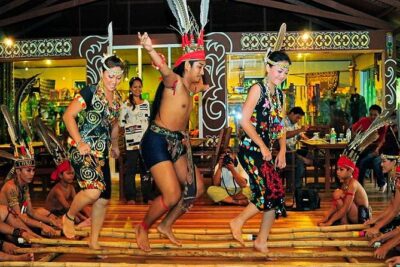
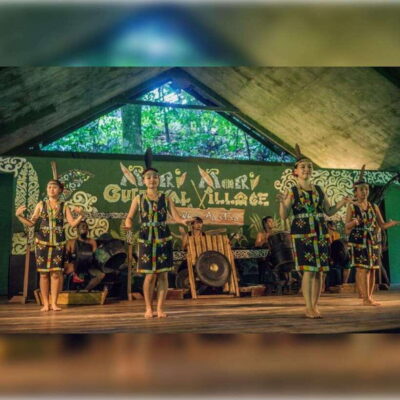
At the end, the tour shifts to high energy with traditional dance performance. You’ll see an energetic show, and in many cases you can even join in the dancing. This is one of the easiest parts of the day because it does not require any previous skill beyond willingness.
I like this finale because it turns the earlier hands-on stops into something you can feel. You’ve been learning through crafts, cooking, and tools, then you end with performance and movement. It’s a full sensory wrap-up.
One small practical thing: bring a little stamina. Even if you are not dancing for long, you’ll still be standing, moving, and adjusting to the rhythm of the show.
Lunch in the village: what you can expect from a traditional meal
Lunch is included and timed at about 30 minutes. It is not just a plate dropped in front of you. Your guide typically explains what you’re eating while you eat, which makes the meal part of the cultural program rather than a break that happens in the middle of nowhere.
Multiple guests highlighted the quality and flavor of the buffet-style lunch. One gluten-free guest specifically noted that ingredients were clearly labeled, which is a helpful detail when you’re trying to eat safely while traveling. Another guest who was vegan reported that the guide helped find suitable options at lunch, including pointing out items like fries that matched their needs.
Practical advice: tell your guide your needs during pickup or when you start the village tour. If you mention restrictions early, you give them time to guide you toward safer choices.
Timing, pacing, and what to wear in Sabah humidity
Your total time is about 5 hours, with a short van ride in and out and roughly 2.5 hours inside the cultural village before lunch. The schedule is full, but it does not feel like you’re being rushed through every spot in a blur. It feels busy because it is hands-on, but it’s organized.
Because the setting is outdoors, pack like you mean it. Insect repellent came up in feedback from a past guest, with the warning that mosquitoes can be relentless. Also consider a light rain layer, since rain is possible and the day still runs with the program.
Wear comfortable shoes with decent grip. You will be walking paths between houses, and you want stable footing in wet or uneven ground.
Does the $67 price make sense for what you get?
At about $67 per person, this tour is priced like a complete cultural package, not like you’re only buying entry tickets. What you actually get in the price is important: transportation, entry to the village, a guided tour, house visits for multiple indigenous groups, live demonstrations, hands-on activities, cultural performances, and lunch.
That bundle is the value. If you tried to recreate it yourself, you’d need transport, a guide, and a plan for how to cover all the demonstrations and performances in one day. Here, the structure is done for you.
One more value point: guides matter. Many guests praised Eddie or Timmy for sharing detailed context during the drive and at each stop, plus helping with food needs when relevant. That kind of guidance turns the day from a checklist into a story you understand.
If you’re the type who learns best by doing, the price feels even fairer because you’re not only observing. You are making a start on fire-making, trying the Congkak game, and practicing with the blowpipe.
Who should book this tour, and who might not love it
You’ll likely enjoy this tour if you want a single, well-paced afternoon that covers multiple Sabah cultural threads. It’s a strong pick for people who like interaction, from games to crafts to dance participation.
It’s also a good option if you want a guide to connect the dots. Many guests talked about how the drive and on-site explanations helped them understand not just what the practices look like, but why they matter.
You might think twice if you dislike structured group activities. The day has a rhythm, and the hands-on parts are part of the deal. If you want silence, long wandering time, or deep immersion over many days, this is still a good start, but it will feel scheduled.
Should you book Mari Mari Cultural Village with Lunch?
If you’re visiting Kota Kinabalu and want a culture-focused afternoon that includes hands-on demos and food, I’d say this is a smart booking. The combo of five tribe house visits, practical activities like Congkak and blowpipe practice, and a traditional lunch makes it easier to turn your time into real understanding.
My call comes with two simple prep steps: bring insect repellent and tell the guide about dietary needs early. If you do that, you’ll get a smoother day and fewer surprises at lunch.
If you care about your guide’s role, keep an eye out for guides like Eddie or Timmy, since their storytelling and energy show up again and again in guest feedback.
FAQ
How long is the Mari Mari Cultural Village tour?
The tour duration is 5 hours.
Where are the pickup and drop-off locations in Kota Kinabalu?
You can choose between two pickup options: The Shore, Citadines Waterfront Kota Kinabalu. Drop-off is at the same two locations. The guide meets you at Burger King, The Shore.
How long is the visit inside Mari Mari Cultural Village?
You spend about 2.5 hours at the village, plus about 30 minutes for lunch.
Which activities are included?
Included activities and demonstrations include fire-making, blowpipe hunting, bamboo cooking, and hands-on experiences such as Congkak, Lansaran activities, hena drawing, and tree bark craft.
Are there cultural performances during the tour?
Yes. The experience ends with a cultural performance featuring traditional dances, and you can even join in.
What lunch is included?
Lunch is included, and it is a traditional meal prepared as part of the village experience.
What languages does the guide speak?
The tour guide speaks English and Chinese.
Is transportation included?
Yes. Pickup and drop-off are included, with a van ride to and from the village.
Is there free cancellation?
Free cancellation is available up to 24 hours in advance for a full refund.
Can the tour accommodate gluten-free or dietary restrictions?
You can bring dietary needs to the guide, and there are examples of guests being able to manage restrictions such as gluten-free diets due to labeled ingredients, plus support for vegan requests at lunch.
Just published around Kota Kinabalu
- Sabah: White Water Rafting Grade 3-4 at Padas River★ 4.7 · 3 reviews
- Full-Day Sepilok Orangutan and Sandakan City Trail from Kota Kinabalu★ 4.0 · 6 reviews
- Island Hopping ( Manukan & Sapi Island ) From Kota Kinabalu★ 4.5 · 9 reviews
- Top of the World – Sunrise Leisure Hike St. Veronica Hill★ 5.0 · 8 reviews
- Sunset E-Foil Experience in Tanjung Aru Beach★ 5.0 · 10 reviews
- Padas River White Water Rafting from Kota Kinabalu (Grade 3 & 4)★ 3.5 · 4 reviews
- Monsopiad Cultural Village Visit with Private Transfer from Kota Kinabalu★ 4.5 · 5 reviews
- Mangrove Kayaking Experience in Borneo★ 5.0 · 8 reviews
Cultural Village Tours, compared.

Mari-Mari Cultural Village Visit + Lunch + transfer
Read our review →
Semenggoh Orangutan Center & Sarawak Cultural Village
Read our review →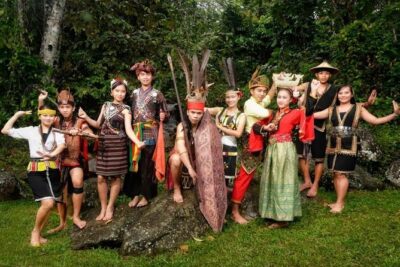
Mari Mari Cultural Village Tour from Kota Kinabalu
Read our review →Browse the lists this tour appears in