
Reviewed · CULTURAL VILLAGE TOURS
Half-Day Mari Mari Cultural Village from Kota Kinabalu
Five cultures in one half day.
That is the magic of Mari Mari Cultural Village, an open-air village that shows how Sabah groups live and work. I like the longhouse routines you can actually observe, and I also like the hands-on style demonstrations like blowpipe making and fire starting. The main drawback is the pace, with short stops that pack in a lot but do not leave time for deep, slow conversations.
This tour also runs with real-world comfort built in. You get hotel pickup and drop-off in Kota Kinabalu, then travel in an air-conditioned van, usually capped at 15 people, which helps the guide keep things moving and answer questions.
At $90 per person, the value comes from what you get for the time: village admission, lunch or hi tea depending on the session, a live cultural dance performance, and a guided route through multiple ethnic communities. If you prefer to linger in one place, you may feel a bit rushed.
In This Review
- Key highlights to know before you go
- Why Mari Mari fits a half-day slot from Kota Kinabalu
- Getting there: pickup, van comfort, and cruise timing
- Entering the cultural village: what you are really seeing
- The Dusun stop: farming as a way of life
- Rungus longhouse: lifted homes and practical building choices
- Lundayeh, Bajau, and Murut: how food, work, and tools change
- Blowpipe making, fire starting, and tattooing: cultural meaning in action
- Bamboo cooking smells, lunch, and the included cultural dance
- Price and value: is $90 a fair deal?
- Who should book this, and who might want a different plan
- Should you book Mari Mari Cultural Village from Kota Kinabalu?
- FAQ
- How long is the Mari Mari Cultural Village tour?
- Is hotel pickup and drop-off included?
- Which cultures will I learn about on this tour?
- What demonstrations are included?
- Is lunch included, and does it depend on the session time?
- What time does the morning session start for cruise passengers?
- What time does the afternoon session start for cruise passengers?
- How many people are in a group?
- Is the Mari Mari Cultural Village admission included?
- Can I get a full refund if I cancel?
Key highlights to know before you go
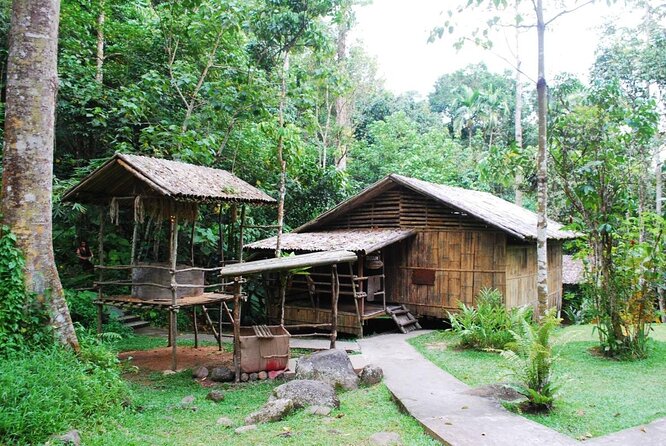
- Open-air longhouses where you see daily life patterns, not just photos
- Blowpipe and fire-starting demos plus tattooing as part of cultural practice explanations
- Bamboo cooking smells and food samples before your meal
- Short stops across 5 groups (Dusun, Rungus, Lundayeh, Bajau, Murut)
- Small group size with hotel pickup and drop-off from Kota Kinabalu
- Two meal styles by session (buffet lunch for the morning session, hi tea for the afternoon session)
Why Mari Mari fits a half-day slot from Kota Kinabalu
If your time in Kota Kinabalu is tight, this is one of the easier ways to get beyond the city. The cultural village is in the countryside, so you feel the switch from urban pace to rural Sabah life quickly. In about four hours, you get a guided overview of multiple ethnic groups, their traditional building styles, daily routines, and food patterns.
I especially like how the experience is structured around observation. Instead of being only a talk in a room, you walk through longhouses and see how things are arranged. That makes the cultural explanations easier to picture when the guide talks about farming, hunting tools, and household life.
The pace is the trade-off. The route moves through several stops, each about twenty minutes. You will leave with a solid sense of variety, but if you love one specific culture and want to go deep, you might wish for more time at each longhouse. Think of this as a strong starter course, not a full semester.
More Cultural Village Tours in Kota Kinabalu
- Kota Kinabalu: Mari Mari Cultural Village Tour with Lunch
★ 5.0 · 152 reviews - Mari-Mari Cultural Village Tour Including Lunch
★ 4.5 · 45 reviews - Sabah: Mari-Mari Cultural Village Visit + Lunch + transfer
★ 4.5 · 16 reviews
Getting there: pickup, van comfort, and cruise timing
Hotel pickup and drop-off are included from Kota Kinabalu. That matters because it cuts down your planning stress. You do not have to coordinate rides, find the right meeting point, or worry about timing once you’re in the countryside.
Transport is air-conditioned and handled by the tour operator. Depending on group size, you ride in a minivan for 6 people and above, or an Innova vehicle for 5 people and below. Either way, the goal is simple: keep you comfortable for the drive and get you back on schedule.
Cruise passengers should watch the start times closely. The morning session begins at 10:00am, and the afternoon session begins at 2:00pm. If you’re connecting from a port timetable, this is the sort of tour you want to take seriously, since four hours disappears fast when you’re working against docking schedules.
One practical note I appreciate: the experience is capped at a maximum of 15 travelers. Smaller group sizes tend to keep the vibe calmer, and it’s easier to hear the guide when questions pop up.
Entering the cultural village: what you are really seeing
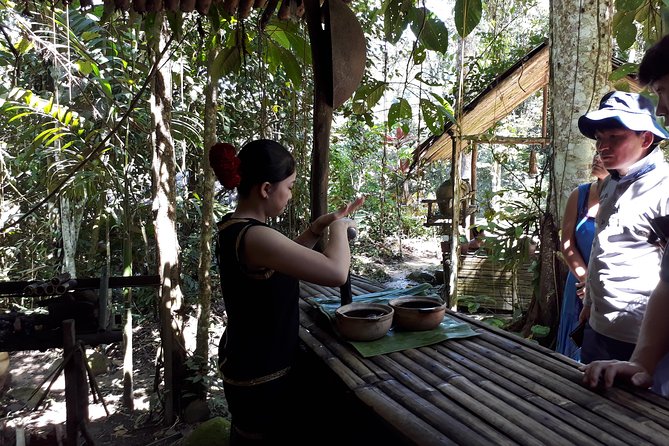
Mari Mari Cultural Village functions like an open-air museum. Its core job is interpretation, meaning you learn what life looked like through carefully presented longhouses and routine-focused demonstrations. You will tour the living layout, then listen as the guide connects each area to a specific community and way of life.
You start with the village area and admission is included. From there, you move through themed stops that focus on farming, household architecture, hunting, and seafaring traditions. The guide’s role is key here. Without that narration, longhouse structures can feel like scenery. With the explanations, they become a kind of visual textbook.
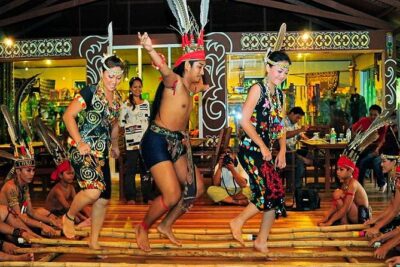
I also like the inclusion of live cultural performance. You are not only learning about the past, you get a present-day cultural performance element that helps tie the cultural practices to something you can watch and hear.
If you’re hoping to do lots of photos, you will likely enjoy it, but keep your attention on the demonstrations too. The best parts tend to be the moments when you can connect tool and food to daily survival, like why certain methods were used and what they meant.
The Dusun stop: farming as a way of life
One of the first cultural themes is Sabah’s paddy cultivation. The guide explains how the Kadazandusun tradition is linked to wet and dry rice varieties. The idea is straightforward: where people live affects what crops they grow, and that shapes daily work and community patterns.
This stop is useful because it anchors the rest of the tour. When you understand that farming practices vary by terrain and location, the later stops about hunting, fishing, and food preservation make more sense. You start seeing culture as practical choices, not just symbols.
In terms of tour experience, this segment is brief, around twenty minutes. You will get the core concept, then move on. If you want more, that’s where a longer, separate cultural visit helps. But for a half-day tour, you get a clear baseline.
A different sort of day out in Malaysia:
- 2D1N Mount Kinabalu Climbing
★ 5.0 · 494 reviews - Bongawan River Cruise: Proboscis Monkey & Fireflies Mangrove
★ 4.8 · 437 reviews - Guided Snorkeling Day Trip, Kota Kinabalu, Sabah, Malaysia
★ 5.0 · 282 reviews - Borneo (Klias) River Cruise & Fireflies Tour
★ 4.5 · 126 reviews
Rungus longhouse: lifted homes and practical building choices
Next comes a Rungus longhouse stop, focused on household layout and building materials. You see how a longhouse is made up of multiple family apartments, and you learn how traditional construction uses wood, bamboo, and palm-leaf thatap roofing.
The key practical detail is the stilt design. The house is lifted off the ground to help avoid flooding and reduce risks from wildlife like snakes. That kind of explanation turns a visual you might otherwise overlook into something you can immediately understand.
This is one of the stops where the open-air format pays off. Instead of only hearing descriptions, you can look at the structure, picture how it channels daily routine, and understand why the design evolved the way it did.
If you have questions about daily life, this is usually a good moment to ask. The structure is right in front of you, so it’s easier for the guide to answer in context.
Lundayeh, Bajau, and Murut: how food, work, and tools change
The middle of the tour is where Sabah’s diversity feels most real. You move from inland and agricultural patterns to communities with different sources of protein and different relationships to land and sea.
For the Lun Bawang, the theme is agricultural work plus animal rearing. The guide covers poultry, pigs, and buffaloes, and also notes that Lun Bawang communities are known as hunters and fishermen. You also learn about food preservation, specifically how meat and fish can be brined or pickled with salt and stored.
Then you shift to the Bajau. The guide explains that many western travelers know them as Sea Gypsies, and that traditional identity differs between East Coast Bajau and West Coast Bajau. You learn that some Bajau groups settled and took on farming and other inland practices. This stop is short, but it helps you avoid the common oversimplification that all Bajau life looks the same.
Finally, the Murut stop connects culture to hunting technology. The guide describes the Murut as shifting cultivators who also supplemented diets through blowpipe hunting and some fishing. There’s also a note about how the Murut were the last ethnic group in Sabah to renounce headhunting. The tour frames this historically and ties it to tool use, rather than treating it as shock value.
These segments are brief by design, about twenty minutes each. The value is variety. You see how farming, hunting, and seafaring change what people eat, how they store food, and how tools matter.
Blowpipe making, fire starting, and tattooing: cultural meaning in action
The most memorable part of this tour is the set of demonstrations. You learn about blowpipe making, fire starting, and tattooing, and the guide explains the symbolism behind practices rather than just showing the movements.
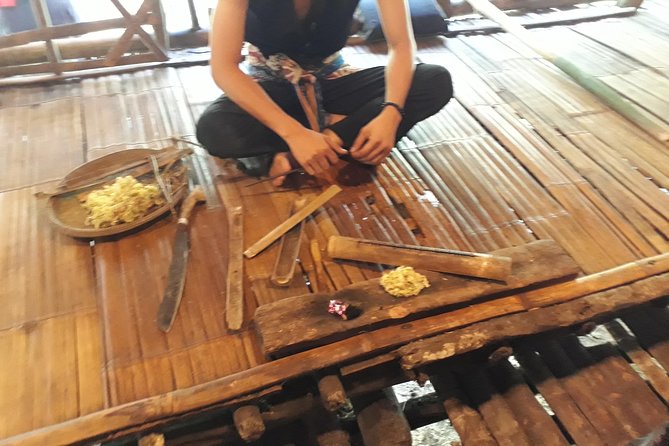
Blowpipe making is important because it’s both craft and purpose. You see tool creation as part of a hunting tradition, which connects back to the Murut and hunting-related explanations earlier in the route. Even if you don’t buy into every symbolic meaning, the cause and effect makes sense: design and materials serve a job.
Fire starting also lands well in an outdoor setting. The idea is practical, and it’s easy to understand why survival skills become cultural knowledge. When you watch a demonstration, it’s the difference between reading about skills and understanding why people valued them.
Tattooing is the one that can feel heavier emotionally. The tour presents it as part of cultural symbolism, so keep an open mind, and let the guide frame it. Since the tour is half-day and scheduled, the tattooing moment is usually shorter than you might expect, but the explanation helps you avoid treating it as just decoration.
If you get a chance to ask questions, do it here. These are the demonstrations where the guide can connect culture to meaning and everyday life fast.
Bamboo cooking smells, lunch, and the included cultural dance
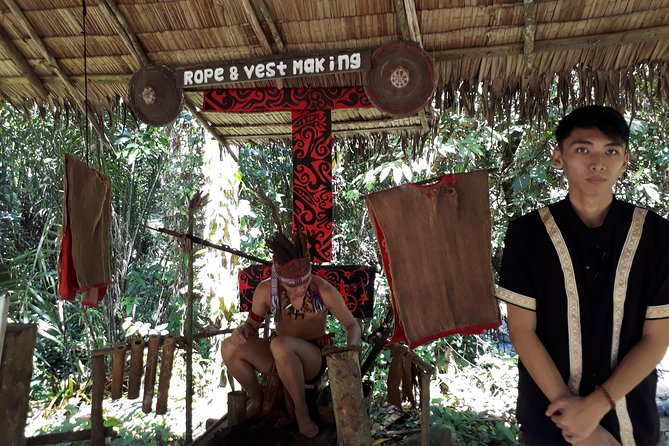
Before you eat, you get the sensory lead-in from bamboo cooking. The tour includes time and explanations tied to food, including the smell of bamboo cooking before lunch. That detail sounds small, but it makes the meal feel tied to the setting rather than like a random buffet stop.
Meal inclusion depends on the session. For the morning session, you get a buffet lunch for the 9:00am session. For the afternoon session, you receive hi tea for the 1:00pm session. That is a big deal for planning, especially if you’re choosing based on your appetite and energy levels.
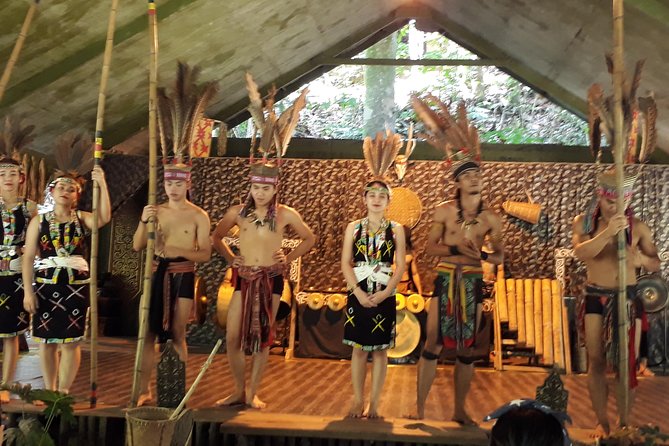
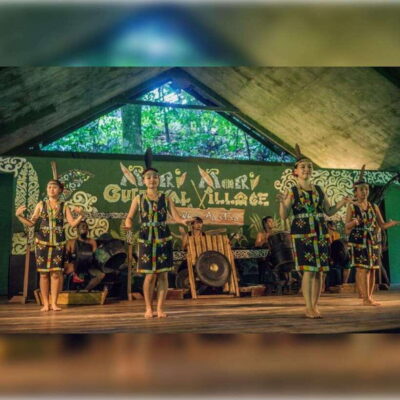
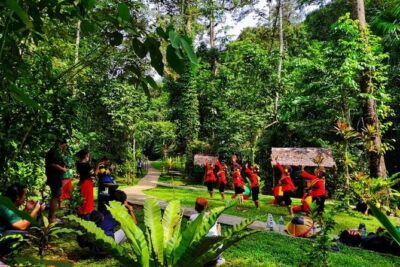
You also get a live Borneo cultural dance performance as part of the included program. It’s a good pacing tool, since it breaks up the more educational longhouse walking with something you can watch and enjoy in a group setting.
I like that you’re not left scrambling for food on your own. With pickup, transport, and meals handled, the tour feels like a complete package, not just admission to a museum.
Price and value: is $90 a fair deal?
Let’s talk value in practical terms. At $90 per person, you are paying for more than an entrance ticket. You’re getting hotel pickup and drop-off, an on-the-ground driver and guide, air-conditioned transport, and admission included for the main cultural village stop.
You also get a meal component, either buffet lunch or hi tea, plus a live cultural dance performance. On top of that, the value is in the guided explanations that connect the five communities, their practices, and the demonstrations.
Could you do it cheaper on your own? Maybe. But cheaper usually comes with trade-offs: more planning, harder timing, and less narrative context. For most visitors, especially those on a short schedule, the bundled experience reduces friction.
Where the value might feel lower is if you love a single culture and want deeper immersion. This tour gives you range, not depth. Still, it’s one of the most time-efficient ways to cover multiple ethnic communities in a single afternoon.
Who should book this, and who might want a different plan
This tour is a great fit if you want:
- a structured introduction to Sabah’s Dusun, Rungus, Lundayeh, Bajau, and Murut traditions
- a compact day with hotel pickup, food included, and cultural performances
- demonstrations you can watch and ask questions about, especially blowpipe making and fire starting
It might be less ideal if you:
- want a slow, unhurried museum day where you can linger for hours at one longhouse
- dislike outdoor walking in the countryside for extended periods
- are sensitive to cultural topics that involve traditional practices like tattooing and hunting-related history
If you’re combining Sabah experiences, this works well as your first cultural stop. You’ll understand the vocabulary and the themes, then you can choose other visits with more targeted focus.
Should you book Mari Mari Cultural Village from Kota Kinabalu?
I’d book it if you want a smart half-day that blends observation, stories, food, and performance. The biggest strength is the structure. You get a route through multiple communities, you see longhouse layouts and practical building choices, and you get demonstrations that turn cultural claims into something you can watch.
I’d think twice if you only want one culture and want deep immersion, or if your schedule is so tight that four hours plus pickup timing will stress you out. Cruise passengers should plan carefully because sessions are fixed at 10:00am and 2:00pm starts.
For most people, this tour is a strong use of time because it removes the hard parts of planning and gives you a guided lens. Also, book ahead. On average, departures are reserved about 18 days ahead, so waiting too long can shrink your options.
FAQ
How long is the Mari Mari Cultural Village tour?
It runs for about 4 hours.
Is hotel pickup and drop-off included?
Yes. Pickup and drop-off from Kota Kinabalu hotels are included.
Which cultures will I learn about on this tour?
The tour covers the Dusun, Rungus, Lundayeh, Bajau, and Murut cultures.
What demonstrations are included?
You’ll see demonstrations such as blowpipe making and fire starting, and you’ll also have tattooing as part of the cultural presentations.
Is lunch included, and does it depend on the session time?
Yes. The morning session includes a buffet lunch for the 9:00am session, while the afternoon session includes hi tea for the 1:00pm session.
What time does the morning session start for cruise passengers?
For cruise passengers, the morning session starts at 10:00am.
What time does the afternoon session start for cruise passengers?
For cruise passengers, the afternoon session starts at 2:00pm.
How many people are in a group?
The experience has a maximum of 15 travelers.
Is the Mari Mari Cultural Village admission included?
Yes. Admission is included for the Mari Mari Cultural Village stop.
Can I get a full refund if I cancel?
You can cancel up to 24 hours in advance for a full refund. If you cancel less than 24 hours before the experience starts, you will not get a refund.
Just published around Kota Kinabalu
- Sabah: White Water Rafting Grade 3-4 at Padas River★ 4.7 · 3 reviews
- Full-Day Sepilok Orangutan and Sandakan City Trail from Kota Kinabalu★ 4.0 · 6 reviews
- Island Hopping ( Manukan & Sapi Island ) From Kota Kinabalu★ 4.5 · 9 reviews
- Sunset E-Foil Experience in Tanjung Aru Beach★ 5.0 · 10 reviews
- Top of the World – Sunrise Leisure Hike St. Veronica Hill★ 5.0 · 8 reviews
- Mangrove Kayaking Experience in Borneo★ 5.0 · 8 reviews
- Padas River White Water Rafting from Kota Kinabalu (Grade 3 & 4)★ 3.5 · 4 reviews
- Monsopiad Cultural Village Visit with Private Transfer from Kota Kinabalu★ 4.5 · 5 reviews
Cultural Village Tours, compared.
Mari-Mari Cultural Village Visit + Lunch + transfer
Read our review →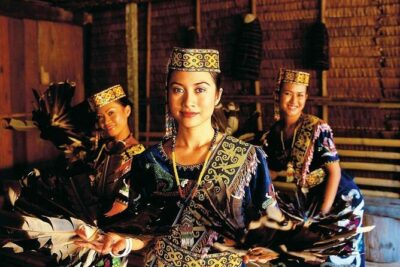
Semenggoh Orangutan Center & Sarawak Cultural Village
Read our review →Browse the lists this tour appears in