
Reviewed · FARMS
Penang: Tropical Fruit Farm Ticket
That first bite is the point. This Penang farm visit mixes fresh tropical fruit tasting with a simple, hands-on look at how farming can be both productive and careful. Set on hilly ground in Teluk Bahang, it gives you a way to see Malaysia’s fruit variety without the usual tourist circus.
Two things I really like: you get access to 200+ species of edible tropical and sub-tropical fruits, and the experience includes structured tastings like fruit enzyme and wild honey. One drawback to plan for is getting there, because you’ll usually want taxi or Grab to make it easy.
In This Review
- Key highlights you will care about
- Teluk Bahang’s hillside orchard, 800 feet up
- What the ticket includes during your 1-day visit
- Fruit enzyme, tea testing, and what you’re actually learning
- Wild honey tastings and your juice or fruit box options
- Exploring 25 acres with 200+ fruit varieties
- Why the sustainable agriculture message matters (not just marketing)
- Logistics and small details that affect your day
- Getting there in Penang: plan for taxi or Grab
- Price and value: is $7 a good deal?
- Who should book this farm ticket?
- Should you book Penang Tropical Fruit Farm?
- FAQ
- Where do I meet the tour?
- How long does this experience last?
- What is included in the ticket?
- Can I bring my own food or drinks?
- What should I bring?
- Is the tour guide English speaking?
- Are kids allowed?
Key highlights you will care about
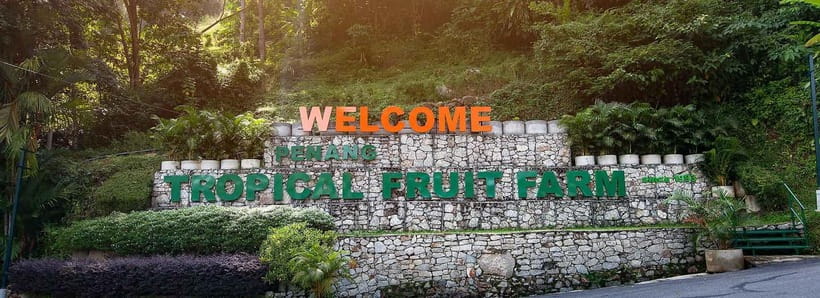
- 200+ fruit species in one stop, so you can sample a wide range without traveling all over Penang
- Guided tour plus tastings, including fruit enzyme, cinnamon and lemongrass tea, and wild honey
- Teluk Bahang, 800 feet up, where the farm’s hillside setting helps different fruit varieties grow
- Sustainability and conservation focus, built into the farm’s education mission
- English-speaking guide available, with other languages possible on request (availability dependent)
Teluk Bahang’s hillside orchard, 800 feet up
Penang Tropical Fruit Farm sits in the North West part of the island, in Teluk Bahang. The big idea here is geography. The farm sits about 800 feet above sea level on hilly terrain, which helps support a broad range of tropical and sub-tropical fruit trees.
The farm covers 25 acres, so you are not looking at a tiny “photo-stop” plantation. It was developed back in 1993, and since then it has stayed focused on three goals: conserving rare and exotic fruit trees, educating visitors about Malaysia’s fruit diversity, and promoting sustainable agriculture. Even if you only have a short visit, that mission shapes what you do on-site: you are there to learn and taste, not just walk past fruit.
This is also where the value shows up. For about a day, you can pack in fruit variety, a bit of food science, and an agriculture lesson that actually connects to what ends up on your plate.
More Farm Visits in Penang:
- Penang Round Island Tour With Tropical Spice Garden & Entopia Butterfly Farm
★ 4.0 · 15 reviews - Penang Tropical Fruit Farm with Fruit Tasting
★ 4.5 · 12 reviews - Kota Kinabalu ATV Riding and Dairy Farm at Mountain Kinabalu
★ 4.0 · 29 reviews
What the ticket includes during your 1-day visit
Your 1-day ticket is built around a guided experience. The guided farm tour runs about 30 minutes, and it comes with a set of structured stops and tastings.
Here’s what is included:
- Guided Farm Tour (30 minutes)
- Introduction to the fruit enzyme process
- Cinnamon and lemongrass tea testing
- Fruit enzyme tasting
- Wild honey tasting
- Option (if you select it): 1 glass of 100 percent pure fruit juice
- Option (if you select it): fresh fruit box
You will also have time during your visit to explore the orchards and learn from educational displays and tours. The “what you do” is the key here. Instead of buying fruit and leaving, you get guided context for why these fruits exist, how they are handled, and how the farm thinks about growth and conservation.
Fruit enzyme, tea testing, and what you’re actually learning
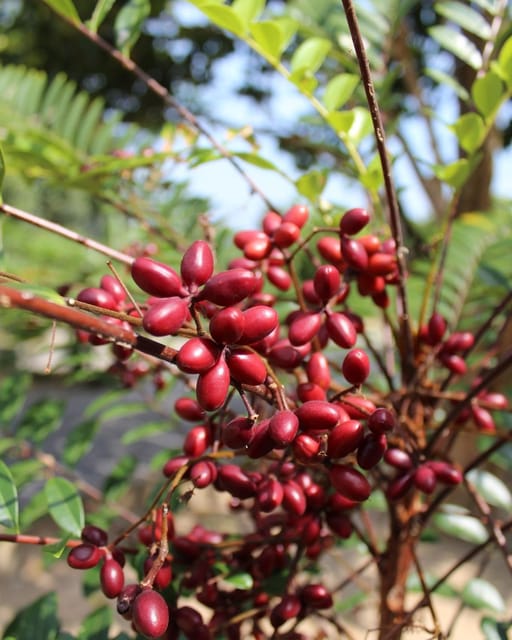
One of the most interesting parts for me is that this tour does not treat fruit as a mystery box. It explains a process: the fruit enzyme process. During the visit, you get an introduction, then you get to taste the result.
That matters because it turns a bunch of fruit names into something more practical. You start to understand the logic behind how fruit products are created and how flavors are shaped beyond just eating fresh fruit off a tree.
Then comes the tea testing: cinnamon and lemongrass tea. Testing means you’re not just handed a cup and told to enjoy. It’s part of the sampling flow, and it helps you pay attention to aromas that can otherwise blend together after several fruit tastings.
In a place like Penang, where there are lots of food experiences competing for your time, I like that this one gives you a short science-and-sense moment. It’s playful, but not random.
Wild honey tastings and your juice or fruit box options
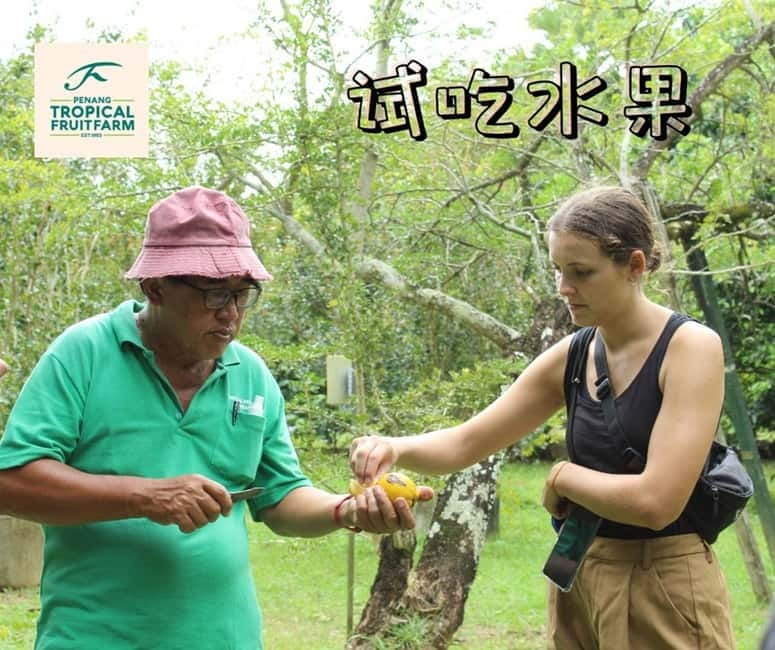
After the enzyme and tea segment, the tour includes wild honey tasting. Honey might sound simple, but it is one of those foods where you can pick up differences if you slow down. The farm includes it as part of the included tasting set, so you’re getting more than just fruit samples.
You can also choose options tied to the experience:
- A glass of 100 percent pure fruit juice (only if you select this option)
- A fresh fruit box (only if you select this option)
This is the part I would think about before booking. If you already plan to eat at Penang hawker stalls and cafes later, the juice or fruit box can be optional. If you want a “take-it-with-you” souvenir that is actually edible and local, the fruit box can be a smart add-on. Either way, the baseline tour still covers tastings, so you are not left paying extra just to taste something.
A few more Penang trips worth comparing
- Penang Hill Funicular Ticket
★ 4.0 · 527 reviews - Penang: The Habitat Penang Hill Entry Ticket
★ 4.5 · 111 reviews - George Town: The Top Penang Entry Ticket
★ 4.0 · 86 reviews - Penang: ESCAPE Theme Park Entry Ticket
★ 4.7 · 37 reviews
Exploring 25 acres with 200+ fruit varieties
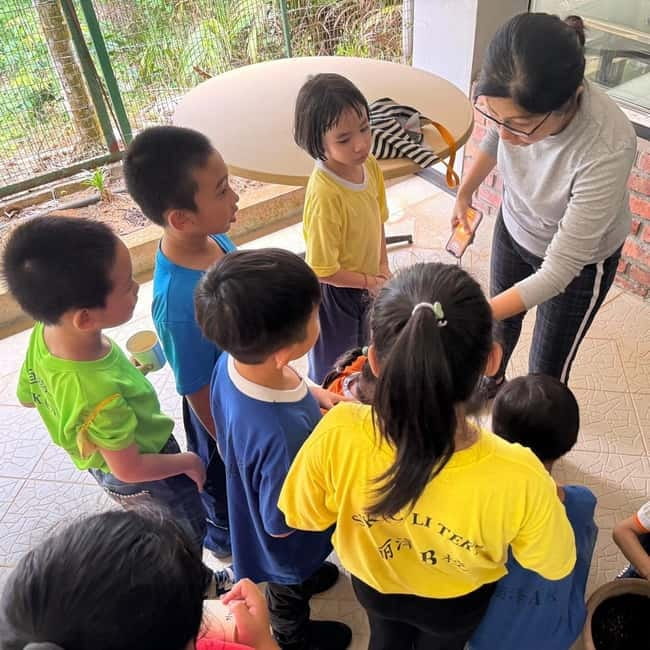
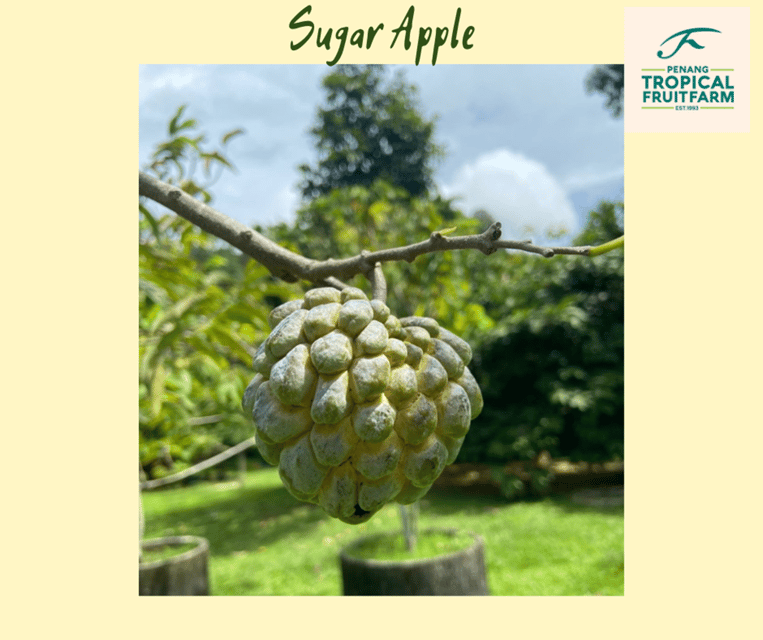
The farm is described as home to over 200 species of tropical and sub-tropical fruits. That number is the headline, but what you should pay attention to is how it changes the feel of the day.
In a smaller orchard, you might see a handful of trees and move on. Here, the diversity is the point. You walk through a working farm with lots of different fruit types, and the educational displays help you connect fruit you taste later to fruit you see growing now.
Also, the farm’s altitude and hillside setting means not every tree feels like it belongs in the same “flat tropical garden.” You get a sense of how different growing conditions can support different fruit varieties. It’s a useful reminder that “tropical” is not one single environment.
If you enjoy food exploration but you don’t want a full-day walking slog, this is a good match. You get a guided chunk, then you can continue exploring at the pace that feels comfortable to you.
Why the sustainable agriculture message matters (not just marketing)
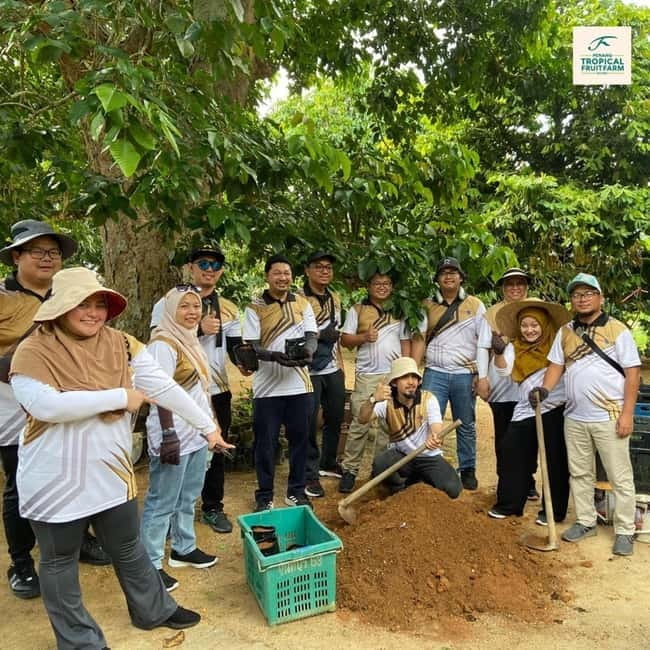
The farm is explicitly tied to conservation and education. It is designed to conserve rare and exotic fruit trees. It also teaches visitors about Malaysia’s fruit diversity and promotes sustainable agriculture practices.
That might sound like a standard eco-line, but you can see how it fits the experience. The tastings are not separate from the mission. You are sampling fruits while learning why the farm is preserving them and how sustainable farming supports long-term variety.
For your trip, that means you’re not only getting pleasure, you’re getting context. You’re more likely to remember what you ate and why it matters. It’s also easier to feel good about the purchase of an experience like this, because the farm’s purpose is directly connected to the flavors you sample.
Logistics and small details that affect your day
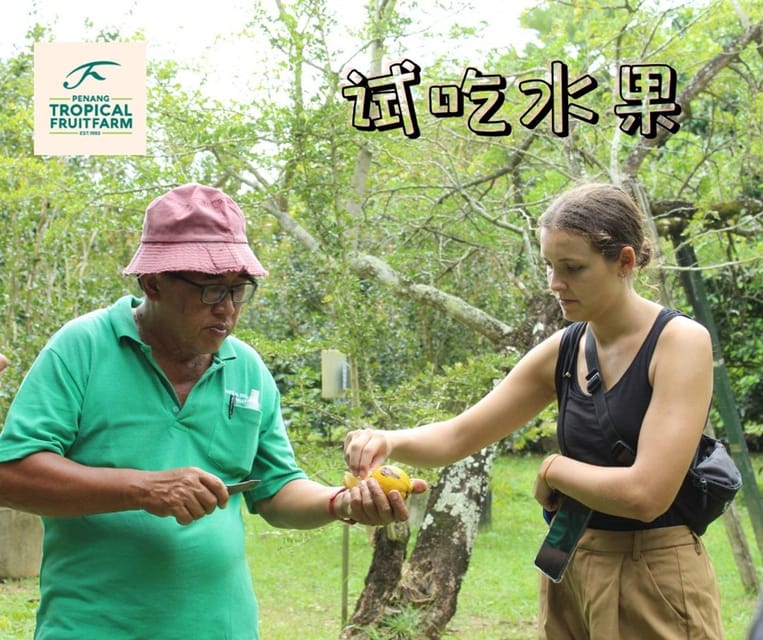
This is a simple ticket, but a few practical notes can save you stress.
First, the meeting point is straightforward: proceed directly to Tropical Fruit Farm for redemption. That’s helpful, because you can focus on arrival rather than searching for a specific hotel pickup.
Second, plan on weather. Bring an umbrella. Penang can be showery, and the farm is outdoors.
Third, there is a clear rule: food and drinks are not allowed. So if you snack between tastings, you will need to stick to what the experience provides. It’s not a deal-breaker, but it does affect how you time the rest of your day. If you tend to get hungry fast, schedule this earlier, then eat a real meal afterward.
Finally, language matters. The guide is English speaking, and other languages can be requested, including Chinese, Cantonese, Arabic, Malay, and Indonesian, subject to availability. If language is important for you, request it early so it has a better shot at being available.
Getting there in Penang: plan for taxi or Grab
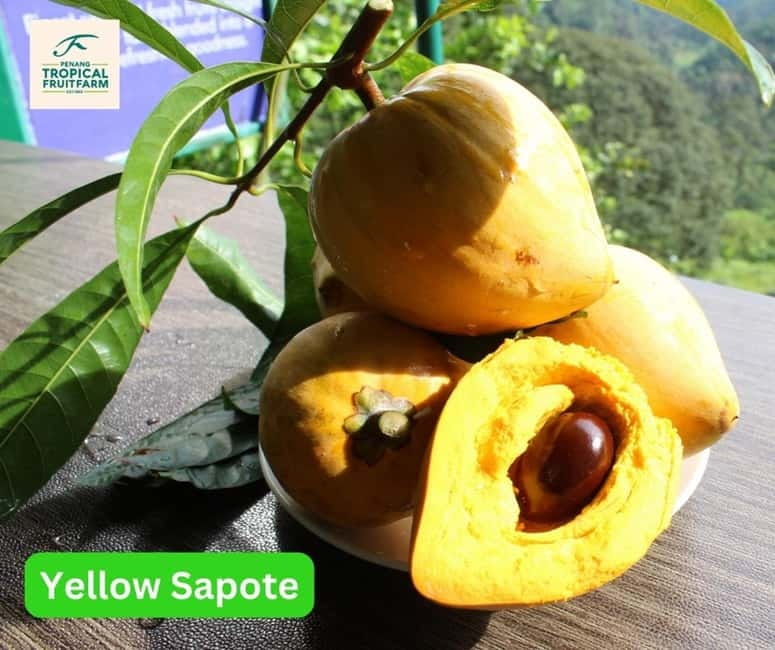
One practical thing I would plan for: this is not the kind of attraction you casually walk to from the center of town. Expect that you’ll likely use taxi or Grab to reach the farm smoothly.
Why I’m stressing this: the farm is on a hillside. That means time and comfort. If you’re traveling with anyone who gets tired easily, a direct ride helps you spend your energy on the fruit, not on the commute.
Price and value: is $7 a good deal?
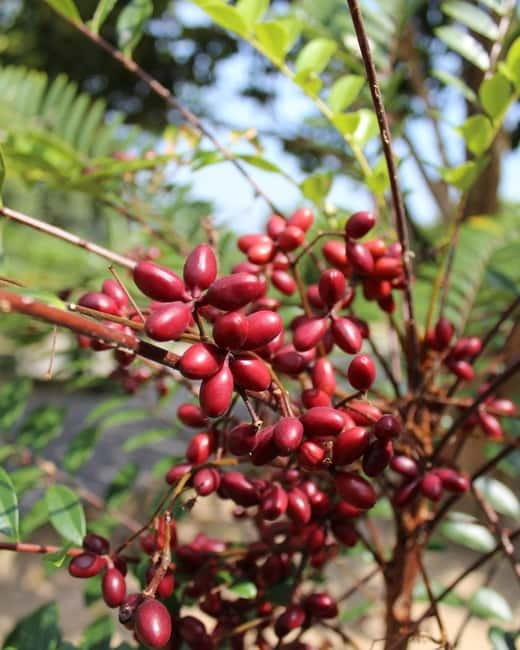
At about $7 per person, this ticket sits in the “easy value” category, especially for a food-and-farm experience.
What makes it good value is not just the price, it’s what you actually get:
- A guided tour (30 minutes)
- Multiple tastings (fruit enzyme, cinnamon and lemongrass tea, wild honey)
- Access to a farm with 200+ species
If you were to pay for tastings separately at a restaurant, you would likely spend more for a shorter experience with no education component. Here, the tastings and the guiding are bundled into one visit.
The only cost consideration is the optional items. If you choose the pure fruit juice or the fruit box, you’ll spend more. But those options are just that, optional, and you still get meaningful tastings without them.
So, I see this as a low-risk add-on that gives you variety in flavors and a different angle on Penang beyond food streets.
Who should book this farm ticket?
This is a great fit if you:
- Want a food experience that is more than eating, you want to understand what you’re tasting
- Like farms, nature, and agriculture, but you do not want a full-day trekking plan
- Travel as a family with kids who can handle a short guided tour and tastings
- Are interested in sustainability and conservation in a practical, non-preachy way
Kids aged 5 to 12 are noted, so the experience is clearly designed with families in mind. Just remember it is an outdoor setting, and you should pack an umbrella.
Who might find it less satisfying? If you only want entertainment, like rides and big shows, this is not that. It is a calm, sensory, educational farm visit. The “wow” comes from fruit variety and tasting, not from flashy attractions.
Should you book Penang Tropical Fruit Farm?
My decision is yes, if you want a smart food stop that actually teaches you something.
Book it if:
- You like tasting lots of different fruits in one place
- You enjoy guided explanations and short, structured experiences
- You want a calm break from Penang’s busier food zones
Skip it or think twice if:
- You hate outdoor walking and weather swings
- You only want a quick snack and do not care about farming and fruit variety
- You are trying to keep every minute free for other specific plans, because you’ll want time for the tastings and orchard exploration
FAQ
Where do I meet the tour?
You should proceed directly to Tropical Fruit Farm for redemption.
How long does this experience last?
It is a 1-day activity, with a 30-minute guided farm tour included.
What is included in the ticket?
The ticket includes a guided farm tour, an introduction to the fruit enzyme process, cinnamon and lemongrass tea testing, fruit enzyme tasting, wild honey tasting, and options for 100 percent pure fruit juice and a fresh fruit box if selected.
Can I bring my own food or drinks?
No. Food and drinks are not allowed.
What should I bring?
Bring an umbrella.
Is the tour guide English speaking?
Yes. The guide is English speaking, and other languages can be requested (Chinese, Cantonese, Arabic, Malay, Indonesian), subject to availability.
Are kids allowed?
The experience notes children aged 5 to 12 years.
Just published around Penang
- Private Tour: Full Day Round Penang Island Tour★ 3.5 · 4 reviews
- Private Penang Hill and Temple★ 4.5 · 6 reviews
- Malaysia: Penang Tropical Spice Garden Guided Tours Tickets★ 5.0 · 5 reviews
- Georgetown Sightseeing Tour★ 3.5 · 9 reviews
- Private George Town UNESCO Heritage Walking Tour★ 4.0 · 22 reviews
- Private Half-Day Penang Highlights City Tour★ 4.0 · 5 reviews
- Penang Airport Transfer★ 5.0 · 4 reviews
- Penang City & Temple Tour with Penang Hill(Fast Lane)& Kek Lok Si★ 5.0 · 6 reviews
Farms, compared.

Kota Kinabalu ATV Riding and Dairy Farm at Mountain Kinabalu
Read our review →
Kinabalu Park, Poring Hot Springs & Desa Farm Tour
Read our review →
Penang Round Island Tour With Tropical Spice Garden & Entopia Butterfly Farm
Read our review →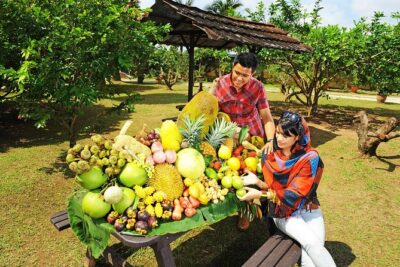
Private Desa Dairy Farm, Kinabalu National Park, Hot Spring & Canopy Walk Tour
Read our review →
Bird Park & Butterfly Farm Nature Include All Entrance Tour From Kuala Lumpur
Read our review →
Kundasang: Day Tour with Desa Dairy Farm and Alpaca Club
Read our review →
Kundasang : ATV Ride, Dairy Farm Visit & Meal Shared Tour
Read our review →Browse the lists this tour appears in