
Reviewed · CITY TOURS
Kuala Lumpur City Full Day Tour with 23 Famous Landmarks
One day, 23 landmarks, zero stress. What I like is the way this tour stitches Kuala Lumpur’s icons together into one ordered route, so you are not spending the day figuring out how to hop between sights.
I especially like the mix of big monuments and hands-on culture stops, like the Royal Selangor pewter experience and a guided-style batik stop. The pace is long and the comfort level is the main selling point, but you should still plan for heat and quick photo stops.
My main caution is simple: not every stop is an all-entry visit. Some key sites are photo-only, and on hotter days you may find comfort details like cold water are not guaranteed, so bring your own water and snacks just in case.
In This Review
- Key highlights worth caring about
- Why this KL full-day route feels efficient for first-timers
- Price and logistics: what you are really paying for
- Batu Caves: the 272 steps and the Lord Murugan statue
- Istana Negara and Parliament area: photo views of power and architecture
- National Monument and Tugu Negara: meaning behind the bronze
- Perdana Botanical Garden and Masjid Negara: the city’s calmer side
- Merdeka Square and Sultan Abdul Samad Building: independence in stone
- River of Life and Kuala Lumpur City Gallery: a smart warm-up
- Old rail architecture and Muzium Negara: quick hits, not full museum time
- Little India and Chinatown: two neighborhoods, one afternoon rhythm
- Central Market and the craft stops: where KL gets practical
- KL Tower, KLCC Park, and Petronas Twin Towers: the skyline ending
- The sweet stop: Harriston Chocolate as a late-day reset
- What I’d watch for on a tour with many quick stops
- Who this tour suits best
- Should you book this Kuala Lumpur 23-landmark tour?
- FAQ
- How long is the Kuala Lumpur city full day tour?
- What time does the tour start?
- Is hotel pickup included?
- Are tickets and admissions included?
- Is lunch included in the price?
- Do I get a guide?
- Is this tour private?
- What is the cancellation policy?
Key highlights worth caring about
- Batu Caves first, with the huge gold Lord Murugan statue and the 272 steps (free ticket time built in).
- Royal and national landmarks in one loop, including Istana Negara photo views and the Parliament area.
- Masjid Negara design gets real: the 73-metre minaret and the umbrella-like roof concept.
- Cultural neighborhood variety, from Little India to Chinatown to multiple temples.
- Craft focus through Royal Selangor pewter and a batik wax-and-dye stop.
- Skyline finale options, KL Tower if you add it, plus a Petronas Towers photo stop.
Why this KL full-day route feels efficient for first-timers
Kuala Lumpur is one of those cities where the distances look manageable on a map, then time disappears in traffic and wrong turns. This tour is built for speed and order. In about 8 hours, you hit a long list of landmark clusters that would be hard to assemble on your own without a lot of backtracking.
I also like that the stops are varied, not just the usual skyline-to-skyline checklist. You get national identity landmarks like Independence Square and the National Monument, religious architecture at Masjid Negara, and then cultural districts that make the city feel like more than a set of Instagram backdrops.
The route is also friendly to different interests. If you care about big-name attractions, you will see them. If you care more about craft and culture, you get that too through the pewter and batik components.
More City Tours in Kuala Lumpur
- Kuala Lumpur: City Tour & Batu Caves Combo
★ 4.4 · 722 reviews - Kuala Lumpur: Full-Day Private City Highlights Tour
★ 4.6 · 589 reviews - Kuala Lumpur City Tour Full Day 8 hours
★ 4.5 · 575 reviews
Price and logistics: what you are really paying for
At $76.94 per person for a full-day, the math is mostly about transportation and time saved. Many stops are marked as free admissions, including Batu Caves, National Monument, National Mosque, and the main city gallery. So your money is paying for the air-conditioned ride, the scheduled order, and a guide or driver who keeps you moving.
You also get door-to-door pickup and drop-off for selected hotels. If your hotel is outside the 5 km radius from the city center, there is an additional USD 10 per person surcharge, payable on the day.
Two other value details matter. First, it is a private tour, meaning only your group participates, not a large shared cattle-car situation. Second, there is an option for KL Tower observation deck admission, but you only get it if you select that option.
Batu Caves: the 272 steps and the Lord Murugan statue
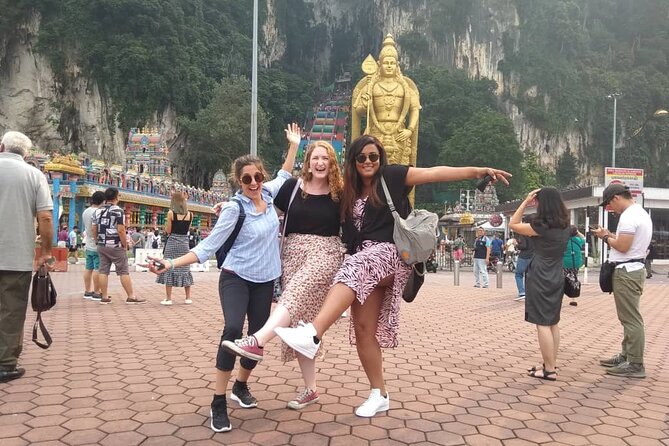
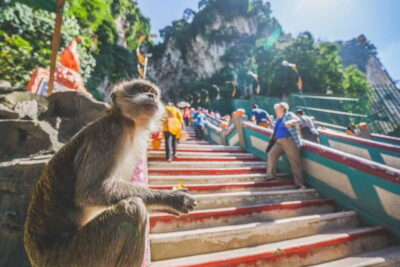
You start at Batu Caves, one of the most famous places in the region, and the first stop sets the tone for the whole day. You will see the enormous gold statue of Lord Murugan, described here as towering about 140 feet (42.7 metres), plus the temple complex at the top.
The big physical commitment is the 272 steps. Thirty minutes is alloted, which means you need a calm but focused strategy: go up, take in the shrine and views, and come back without lingering too long on the journey portions.
Because this is Kuala Lumpur, expect heat to play a role. I would plan around that by bringing water and wearing shoes you feel confident in on steps. Also, be ready for prayer-related crowds at religious sites, and dress and behave accordingly.
Istana Negara and Parliament area: photo views of power and architecture
Next comes the royal side of Malaysia, but with an important expectation. At Istana Negara, tourists are not permitted to enter. You get a photo stop at the main entrance only, and that is it.
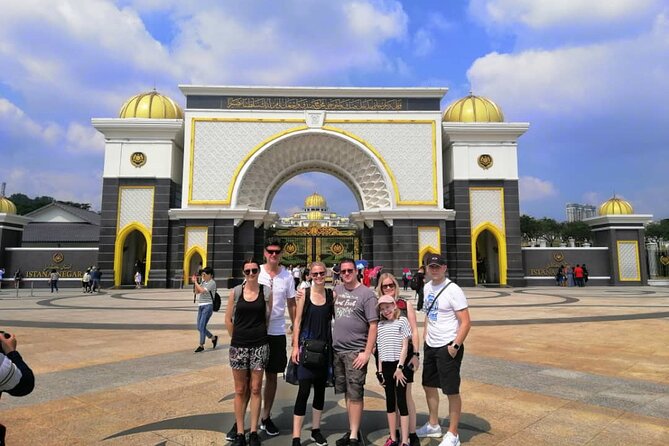
Still, it is worth knowing what you are looking at. The palace is the official residence of the Yang di-Pertuan Agong, and the complex is described as having 22 domes across three main portions: the Formal Component, Royal Component, and Administration Component. The palace opened in 2011, replacing an older palace at a different compound.
Then you shift to the legislative complex. The Malaysian Houses of Parliament sits near the National Monument and is described as a two-part complex, including a 17-story, 77-metre-tall tower. Even from the outside, it is a strong visual marker of how central Kuala Lumpur used to be as the federal seat.
A different sort of day out in Malaysia:
- Private Half-Day Batu Caves and Cutural Tour in Kuala Lumpur
★ 5.0 · 3,107 reviews - Sambal Streets Kuala Lumpur Food Tour with 15+ Tastings
★ 5.0 · 2,438 reviews - Historical Malacca Guided Day Tour (Shared Tour)
★ 5.0 · 2,172 reviews - Kuala Lumpur: Sambal Street Food Tour with 15+ Tastings
★ 4.9 · 1,657 reviews
National Monument and Tugu Negara: meaning behind the bronze
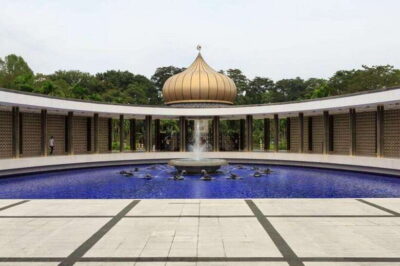
The National Monument, or Tugu Negara, is not just a dramatic sculpture. It is a commemoration of those who died in Malaysia’s struggle for freedom, specifically against Japanese occupation during World War II and the Malayan Emergency (1948 to 1960).
The description here highlights it as the world’s tallest bronze freestanding sculpture grouping, and the format is powerful: it gives you a serious pause between the more tourist-oriented stops.
If you like context, this is one of the stops where a guide can do a lot of good. You can take it in quickly if you need to, but it also rewards a slower moment so the meaning lands. The special ceremonies tied to it, including the Warriors’ Day garlanding tradition and how celebrations have shifted, also help you understand how national memory is handled in real time.
Perdana Botanical Garden and Masjid Negara: the city’s calmer side
Midday in Kuala Lumpur can feel like work, so I love that the route builds in greenery and architectural contrast.
First is Taman Botani Perdana (Perdana Botanical Garden), formerly connected to Lake Gardens. The description emphasizes the idea of tropical rainforest ambience in the middle of a city, with tropical plant collections and a rehabilitated botanical space in the Heritage Park area. Even a short 20-minute stop can reset your head.
Then comes Masjid Negara, one of the most distinctive modern mosques in Malaysia. You get another 20-minute window, which is perfect if you plan to focus on a few key design elements: the 73-metre-high minaret, the umbrella-like roof concept, and the 16-pointed star shape described for the concrete main roof.
A mosque is never just a photo spot. If you want to see it properly, take a moment to notice symmetry, lines, and how the reflected light plays off the compound’s pools and fountains. Dress and behavior still matter.
Merdeka Square and Sultan Abdul Samad Building: independence in stone
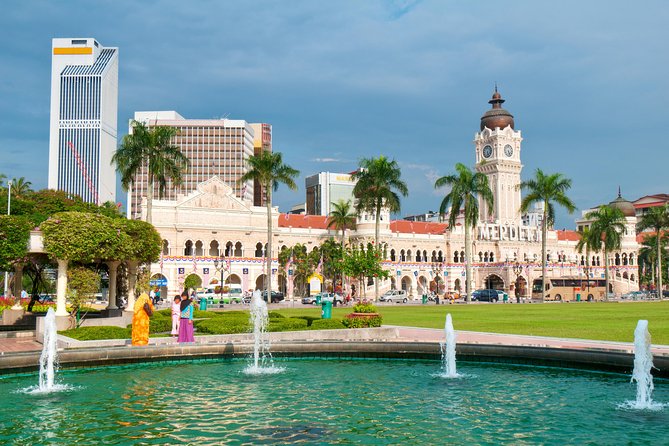
After the mosque, you move into the history-loaded zone around Dataran Merdeka (Independence Square). The key detail here is what happened on 31 August 1957, when the Malaysian flag was hoisted for the first time at midnight, after the Union Flag was lowered.
This is a quick 10-minute stop, so treat it like a landmark anchor. You are there to connect names, locations, and symbolism: it sits in front of the Sultan Abdul Samad Building.
That building is late nineteenth century and originally served as British colonial administration offices. It was renamed in 1974 after Sultan Abdul Samad. The value of stopping here is that KL’s skyline energy is only half the story. The other half is visible in the way power, governance, and colonial-era architecture sit just steps from each other.
River of Life and Kuala Lumpur City Gallery: a smart warm-up
The River of Life stop works best when you look for what makes it unique. It is described as a convergence point for the Klang River and Gombak River, near Masjid Jamek and Sultan Abdul Samad. This is one of those places where you can get your bearings for why the city developed where it did.
Right after, you visit the Kuala Lumpur City Gallery, a small museum that functions like a briefing room. The ground floor includes an Old Kuala Lumpur photographic record and a scale model of Merdeka Square. The first floor includes a modern KL scale model show.
This is not a huge museum. But with only about 20 minutes, it is a great way to understand what you are seeing, especially if you care about the city’s transformation from old layout to modern centers.
Old rail architecture and Muzium Negara: quick hits, not full museum time
The tour then touches a piece of colonial-era infrastructure. The Malayan Railway Administration Building section is anchored by the old Kuala Lumpur railway station story: construction began in 1910, completed in 1917, and it served as a hub before KL Sentral assumed much of the role in 2001.
The building is noted for a mixture of Eastern and Western design influences. Even a 10-minute stop gives you a sense of KL’s layered identity through architecture.
Then there is Muzium Negara. Here you do not get admission included, and the stop is described as photo stop only. You still pass the National Museum building, known for a Malay palace style and galleries that cover Malaysian history from prehistoric times to the present. It is also described as featuring large murals of Italian glass mosaic.
If museums are your main thing, this stop might feel short. If you just want the exterior landmark moment and to keep moving, it fits the tour style.
Little India and Chinatown: two neighborhoods, one afternoon rhythm
By the time you reach Little India in Brickfields, you have already seen enough national monuments to appreciate why neighborhoods matter. Brickfields is described as the biggest Little India in Malaysia, with Indian shops selling clothing, provisions, and food.
This stop is given 30 minutes, which is enough time to walk the streets, look at storefronts, and grab a snack if you want. The note about Brickfields growing in importance, tied to KL Sentral development, also gives you a reason the area keeps changing.
Then you swing into Chinatown, described as a hub for food, accessories, clothing, and more. It is also tied to sightseeing, like Buddhist temples, art galleries, traditional food, and coffee houses. This is another 30-minute window, and Chinatown is the kind of place where pace matters. You do not need to try to see everything. You just need to pick your moments.
You also get two more temple stops here that make the neighborhood feel layered rather than one-note. Guan Di Temple is a Taoist temple dedicated to Guan Di (Guan Yu), drawing Chinese and Malaysian visitors who blend beliefs across Taoism, Buddhism, and Confucianism. Nearby is Sri Mahamariamman Temple, described as the only Hindu temple in Malaysia, with origins traced to 1873, and the current structure completed in 1968 with Italian and Spanish tiles and gold motifs.
These two temple visits give you quick religious architecture contrasts in the middle of the shopping streets. Even as quick stops, they help you read the neighborhood beyond the storefronts.
Central Market and the craft stops: where KL gets practical
The Central Market Kuala Lumpur stop is a good change from purely religious or monument-focused moments. It is described as an Art Deco building completed in 1937, but with origins as a wet market founded in 1888.
It is positioned near the Klang River and on streets around Petaling Street. The practical value here is that Central Market is not only a landmark. It is also a shopping and browsing area, so you can use your time flexibly if you want souvenirs or just a local-feeling stop.
Then the tour shifts into craft and material culture, which is where this route feels more personal.
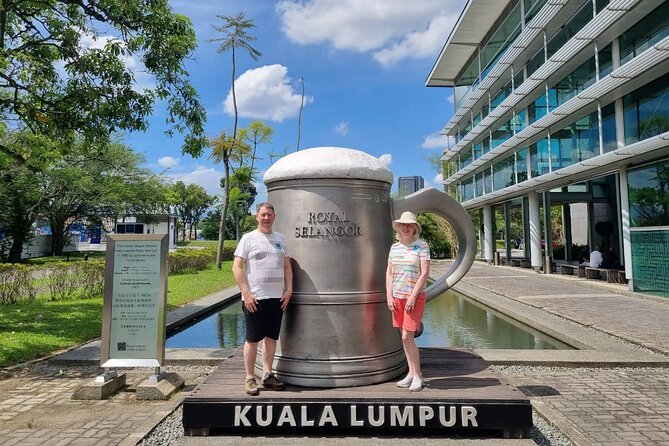
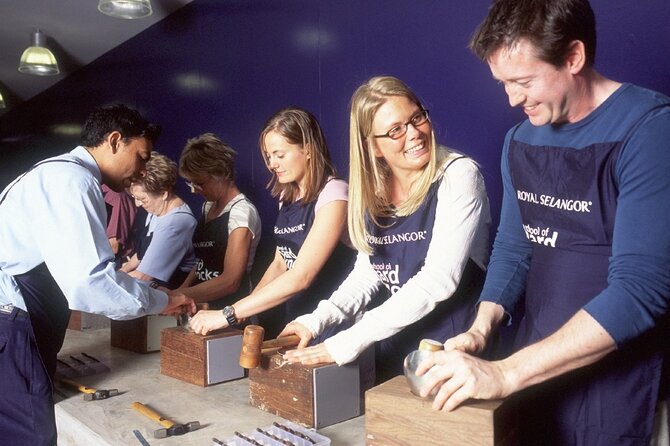
At the Royal Selangor Visitor Centre, you focus on pewter. The description ties it to the colonial tin rush and to Royal Selangor’s founding in 1885. You also get exhibits about pewter and pewtersmithing, plus the chance for craft workshops. The visitor centre is also described as having strong TripAdvisor awards history, including a 2016 Traveller’s Choice Award and other consecutive winners.
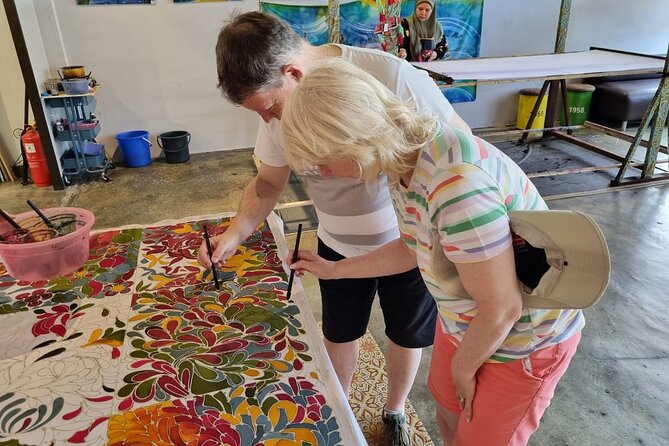
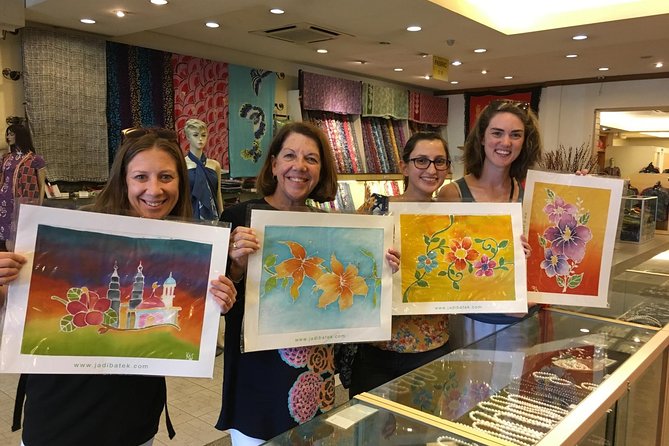
After pewter, you visit Jadi Batek Gallery, where the emphasis is on batik making using wax and dye. Even if you do not become a craft expert by the end of the day, these stops help you understand how KL makes and markets identity, not just how it poses for photos.
KL Tower, KLCC Park, and Petronas Twin Towers: the skyline ending
Most Kuala Lumpur tours eventually lead you here, but what matters is how the ending is structured.
First, KL Tower (Menara Kuala Lumpur). This is an included admission stop only if you select the KL Tower option. If you did not select it, it becomes a photo stop. The tower is described as 421 metres high with an antenna, and built with 22 levels, elevators, and a stairwell. It also preserved a 100-year-old jelutong tree during construction, protected by a retaining wall around it.
In plain terms: KL Tower is a strong “you can actually see everything” option. If you care about views, this is the part I would not skip.
Then comes KLCC Park, described as designed by Roberto Burle Marx. The park is calm compared to the surrounding city energy, with man-made features and tropical greenery. The note about space illusion from shape and topography can be a fun way to look at it once you arrive.
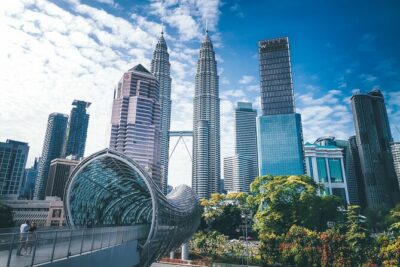
Finally, you get the Petronas Twin Towers as a photo stop only. The towers are described as 88-storey supertall buildings at 451.9 metres, and as the world’s tallest twin skyscrapers until later surpasses. Since admission is not included here, your best strategy is to spend your photo time well: find good angles, and keep an eye on lighting if the sky changes.
The sweet stop: Harriston Chocolate as a late-day reset
Near the end, you get a Harriston Chocolate stop described as discovering chocolates with a unique Malaysian twist. It is a 20-minute break, and honestly, that kind of timed stop can save the day when you are already tired from steps, walking, and heat.
It is also a moment to regroup. If the morning felt intense, use this to slow down, cool off, and decide if you want to buy something small for later instead of forcing yourself to shop during the busy city segments.
What I’d watch for on a tour with many quick stops
With a route packed this tightly, the difference between a great day and a frustrating one often comes down to people skills and pacing.
On positive departures, the logistics feel smooth, with an on-time start and a professional driver. In one standout experience, the guide named Suresh was described as kind and informative, and the KL Tower views were the highlight with everything feeling well put together. A clean, sturdy vehicle also helps when the day runs long.
On less ideal days, a few problems can show up: limited English expression can make it harder to follow the narrative, and if the group energy gets low in the heat, you need the guide to stay firm on the schedule. There are also reports of Batu Caves being handled late or discussed in a way that made the start feel less certain. The practical fix is to confirm early that Batu Caves is actually on your route, and do not assume delays will solve themselves.
Who this tour suits best
This tour is a solid fit if you want a first-timer overview and you like seeing a lot of named places in one day without hiring multiple rides. It is also a good choice if you appreciate cultural stops like pewter and batik, not only monuments.
It may be less ideal if you want deep time inside museums or full access to palace interiors. Istana Negara, Petronas Twin Towers, and Muzium Negara are described here as photo stop only or admission not included, so plan expectations accordingly.
If you are traveling with mixed interests, this format can work well because the route swings between architecture, history sites, neighborhoods, and craft.
Should you book this Kuala Lumpur 23-landmark tour?
I’d book it if your priority is order and efficiency. For the money, you are paying for scheduled transport across Kuala Lumpur, plus a long list of free or quick-access stops that let you sample many sides of the city in one 9:30 am start.
I would hesitate if you care most about long museum time, or if you need guaranteed full-entry access everywhere. This is also a long heat-exposure day, so pack like you are going to be outside more than in air-conditioning.
If you want the best version of this tour, pick the KL Tower observation deck option and plan a simple lunch budget, since lunch is not included. And bring your own water to stay comfortable through the steps and open-air segments. If you do those two things, this is the kind of day trip that can leave you feeling like you actually understand Kuala Lumpur, not just that you saw it.
FAQ
How long is the Kuala Lumpur city full day tour?
It runs for about 8 hours.
What time does the tour start?
The start time listed is 9:30 am.
Is hotel pickup included?
Pickup is offered for selected hotels, with door-to-door pickup and drop-off included. If your pickup is outside the 5 km radius from the city center, there is an additional USD 10 per person surcharge.
Are tickets and admissions included?
Many stops are listed with free admission, including Batu Caves, the National Mosque, and several landmarks. However, some stops are photo stop only or do not include admission, such as Istana Negara, Muzium Negara, and the Petronas Twin Towers. KL Tower observation deck admission is included only if you select the KL Tower option.
Is lunch included in the price?
No, lunch is not included.
Do I get a guide?
You get an English speaking driver. If you choose the option that includes a professional licensed tour guide, then a licensed guide is provided.
Is this tour private?
Yes. It is described as a private tour/activity, with only your group participating.
What is the cancellation policy?
You can cancel for free up to 24 hours in advance for a full refund. If you cancel less than 24 hours before the start time, the amount paid is not refunded.
Just published around Kuala Lumpur
- Sunway Lagoon Ticket (One Day Pass)★ 3.5 · 5 reviews
- Kuala Lumpur City & Batu Caves Temple Private Tour★ 4.5 · 3 reviews
- Private Transfer: Kuala Lumpur International Airport to or from Hotel★ 4.5 · 14 reviews
- Private Tour Kuala Lumpur Shore Excursion Include Batu Caves★ 5.0 · 29 reviews
- Private Kuala Lumpur Shore Excursions★ 4.5 · 22 reviews
- Genting SkyWorlds Theme Park Tickets (Optional)★ 5.0 · 5 reviews
- Private Airport Transfer★ 5.0 · 4 reviews
- Private Chauffeur For Meetings, Side Visit, Tours, Airport Transfer, Sightseeing★ 5.0 · 13 reviews
City Tours, compared.
Private KL City Tour with Petronas Twin Towers & Batu Caves
Read our review →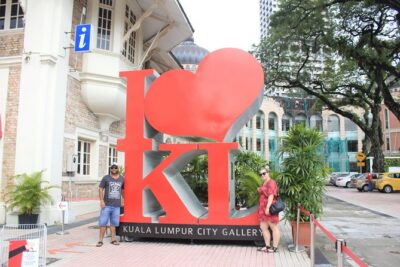
Kuala Lumpur Half Day Guided City Tour (SIC/Shared Tour)
Read our review →
Kuala Lumpur Notable Landmarks & City Highlights Tour
Read our review →
Cameron Highland Full Day Tour from KL City (Private)
Read our review →
Browse the lists this tour appears in