
Reviewed · ORANGUTAN & WILDLIFE SANCTUARIES
Bornean Sun Bear Conservation Centre & Sepilok Orang Utan Rehab Centre Tour
This is the kind of day that changes your tempo fast. In one planned route, you get orangutan rescue education at Sepilok and then the Bornean Sun Bear Conservation Centre nearby, with an English-speaking guide and small-group pacing. The big plus is you travel in a comfortable setup with hotel pickup and drop-off, and you keep the group to a maximum of 15. The main thing to consider is that orangutan sightings are not guaranteed, since the animals roam freely.
I like how the tour is built around real viewing moments, not just ticket stamps. You’ll start at the orangutan rehabilitation centre, watch a short documentary on rescue and rehab, then head out to the feeding platform area where sightings can happen around the daily feeding times. Then you shift to the sun bear centre, where you learn why the world’s smallest bear needs a separate rescue and awareness program.
If you want a day that feels both practical and genuinely educational, this fits well. It is also a good choice if you prefer an organized flow, because everything runs on-site with included admissions at each stop.
In This Review
- Key points to know before you go
- Where Sandakan and Sepilok come together in one easy day
- Price and what you actually get for $112 per person
- Sepilok Orang Utan Rehabilitation Centre: what rehab is supposed to do
- The 10:00 and 15:00 feeding times, and why sightings stay unpredictable
- Moving through the rainforest toward the feeding platforms
- Bornean Sun Bear Conservation Centre: a smaller bear with a big mission
- Facilities that help you see ethically, and how to use them
- What to pack and wear for Sepilok rules that really matter
- Timing, group size, and the 8-hour flow
- Who this tour suits best, and who should reconsider
- How this experience feels beyond the animals
- Should you book this tour? My call
Key points to know before you go
- Small group size (max 15) keeps the experience calm and gives your guide room to explain.
- English-speaking guide plus included tickets reduces stress so you can focus on the animals.
- Two different rescue missions in one day (orangutans first, sun bears second) makes the learning stick.
- Feeding time windows at the orangutan centre shape when you are likely to see animals, but sightings still are not guaranteed.
- Rainforest walking and a viewing platform setup means you are watching from the right place, not just moving around.
- Sepilok rules matter: avoid bright clothes, pack small, and expect no big bags inside the orangutan centre.
Where Sandakan and Sepilok come together in one easy day
Sandakan is the jumping-off point, and the tour uses that perfectly. You start around 8:00 am and spend the day in the Sepilok area, where two major wildlife rescue centres sit close to each other. That adjacency matters. Instead of bouncing across town for hours, you can concentrate on what you came for: rehab work, rescue stories, and how visitors can observe animals responsibly.
The format also helps if you do not want to micromanage timing. You get transfers in an air-conditioned vehicle and a guide to keep the flow moving between stops. When you travel in Malaysia with limited time, that is a real value.
More Wildlife Sanctuaries in Sandakan
- Private Full Day Sepilok Orang Utan, Bornean Sun Bear and Rainforest Discovery Center Tour
★ 4.0 · 54 reviews - Labuk Proboscis, Sepilok, Sun Bear, Sandakan City Tour & Lunch
★ 4.5 · 25 reviews - Full Day Orang Utan Sepilok, Proboscis Monkey, Sunbear, RDC
★ 5.0 · 15 reviews
Price and what you actually get for $112 per person
At $112 per person, this is not a bargain tour. But it also is not priced like a luxury private guide. The value comes from what is bundled.
Included in the tour price, you get:
- Hotel pickup and drop-off
- Transfers and sightseeing by air-conditioned vehicle
- A license English-speaking guide
- Admission tickets at both centres
- Sales and services tax
- A mobile ticket format
What you might notice is that the cost includes the work of getting you to two separate sites, with the right timing inside each centre. If you were to DIY it, you would still need entrance tickets, transport, and someone to interpret what you are seeing. Here, the guide is part of the package, and the small group size is a quality-of-experience factor that often gets overlooked in budget comparisons.
A fair caution: one past experience noted a late pickup and a longer overall travel day, which can happen when logistics are off. If punctuality is your top priority, be ready for the reality of shared operations.
Sepilok Orang Utan Rehabilitation Centre: what rehab is supposed to do
Your first stop is the Sepilok Orang Utan Rehabilitation Centre. This place has been operating since 1964, and the focus is very specific: rehabilitating orangutans that were orphaned.
That word, orphaned, matters because it changes what rehab means. Orangutan youngsters normally spend 5 to 6 years with their mothers, learning the skills they need to survive in the wild. At Sepilok, the staff monitor health carefully and provide teaching so these young orangutans can handle the wild environment later on.
Before you go into the viewing area, expect a short documentary about rescue and rehab. I like this step because it gives you context while you are still fresh and patient. You start the day knowing what the centre is trying to accomplish, not just hoping you will see animals.
You will also get about 2 hours at this stop, which is enough time to move through the exhibits, settle into the viewing rhythm, and catch the feeding window if it lines up with your time slot.
The 10:00 and 15:00 feeding times, and why sightings stay unpredictable
One of the most practical details is the schedule for orangutan feeding: 10:00 am and 3:00 pm daily. This is not a show, but it does guide when the feeding platform area is most active. When your timing overlaps, your odds improve because the centre is drawing attention and food routines that encourage movement toward the platform.
That said, the tour is clear for a reason: orangutan sightings are not guaranteed. The animals are free in their habitat, so you might see multiple individuals, or you might see none during your time inside. It can depend on the day’s animal movement and weather.
My advice is to treat this as an observational mission, not a promise. If you walk in expecting certainty, you will leave with a bad mood. If you walk in expecting possibility and patience, the day feels rewarding even when your personal sighting count is low.
Also worth knowing: the tour advises you to do not wear bright coloured attire, because it can attract orangutans. That is not superstition. It is common-sense visitor guidance for animals that investigate with curiosity.
A different sort of day out in Malaysia:
- Borneo Wildlife Tour 3 Days 2 Nights At Tanjung Bulat Jungle Camp Kinabatangan
★ 4.5 · 100 reviews - Kinabatangan River Cruise from Sandakan
★ 4.0 · 28 reviews - Mangrove Cruise with Fireflies Tour Including Dinner from Sandakan
★ 4.5 · 25 reviews - Sandakan: 3D2N The Wild Heart of Borneo River Secrets
★ 4.6 · 24 reviews
Moving through the rainforest toward the feeding platforms
After the documentary, you head through the rainforest area to the viewing area where orangutans may come to the feeding platform. This part matters because you are not just staring at a fence. You are walking through a natural setting that is part of the observation experience.
The benefit of having an English-speaking guide here is simple: they can help you interpret what you are seeing in real time. You can focus on animal behaviour and the rehab message instead of trying to figure it out from scratch while standing in a crowd.
Comfort tip: wear casual clothes and walking shoes, because you are doing an outdoor walk. Even in places that are well organized, your body still needs traction.
Bornean Sun Bear Conservation Centre: a smaller bear with a big mission
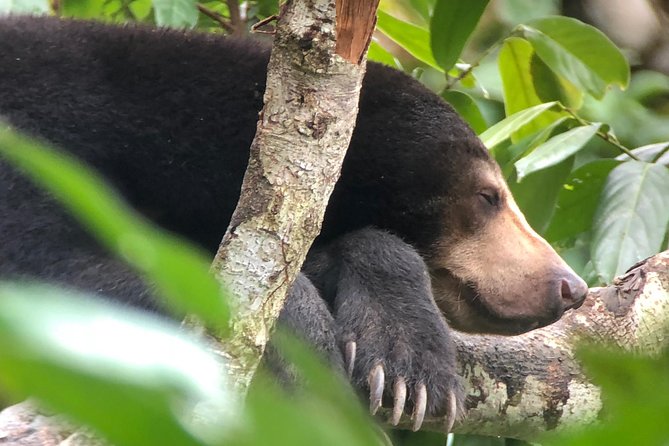
After the orangutans, you head to the Bornean Sun Bear Conservation Centre at Sepilok. This centre opened in 2014 and has a different goal than the orangutan rehab program. It concentrates on the world’s smallest bear, the sun bear, and the work is about both awareness and rehabilitation.
Here is what makes this stop feel meaningful: the centre aims to release into the forest individuals that can be rehabilitated, and it also supports bears that are still considered wild. That is a nuanced mission. You are not only looking at rescues as permanent residents. You are seeing a system designed to help bears regain the skills and conditions they need.
You will also learn that there are about 44 rescued ex-captive sun bears at the centre. That number helps you understand the scale of daily care and the importance of ongoing public support.
Your time at this stop is shorter, around 30 minutes with admission included. That can feel quick, but it is also practical. The centre is designed with visitor routes, including:
- an observation platform
- a boardwalk
- a visitor centre
With that setup, you get the key viewing areas without turning it into a half-day detour.
Facilities that help you see ethically, and how to use them
Both centres are built around responsible viewing. The sun bear centre’s observation platform and boardwalk are especially helpful because they guide your movement. Instead of moving randomly and unintentionally blocking sightlines, you follow the visitor route that gives animals and people a better setup.
In practice, this means:
- You spend more time watching than searching.
- You can focus on behaviour, not just where to stand.
- Your guide can point out what to look for, which matters with smaller animals that may move quickly.
The visitor centre also helps bridge the gap between “I saw a bear” and “I understand the work behind why it is there.” Even a short explanation can make the sightings feel more purposeful.
What to pack and wear for Sepilok rules that really matter
This tour gives you a few specific rules, and they are worth taking seriously because they affect what you can bring inside.
For the Sepilok Orang Utan Centre:
- No food or drinks inside.
- No bags bigger than a 6-inch size bag allowed inside.
For the animal behaviour side:
- Avoid bright coloured attire, since it can attract attention from curious orangutans.
For comfort:
- Dress code is casual and comfortable walking shoes.
So the practical move is to travel light. Bring only what you truly need for the viewing experience. If you need water, plan it around the “no drinks inside” rule. Keep your bags small enough that you do not end up fumbling at an entry point.
Timing, group size, and the 8-hour flow
This is listed as roughly 8 hours total. With two centres, hotel transfers, and time built into the observation periods, the schedule stays tight but not rushed.
The group size is capped at 15 travelers, and that is a meaningful difference. Smaller groups tend to handle the centre rules better. People are less likely to crowd walkways, and your guide can manage the pace without sounding like a traffic controller.
Pickup and drop-off are included, which saves your energy. If you are staying in Sandakan and not planning to rent anything for the day, this is the easiest way to get out to Sepilok with less friction.
One more nuance: orangutan feeding times are daily at 10:00 am and 3:00 pm, and your exact viewing luck depends on how your schedule overlaps. If you are sensitive to missing key moments, you will want to arrive mentally prepared for the reality that wildlife timing does not work on human clocks.
Who this tour suits best, and who should reconsider
This tour fits best if you want:
- Two rescue centres in one day without logistical headaches
- An English-speaking guide to interpret what you see
- A day focused on observation, education, and responsible viewing
You might especially like it if you are traveling as a couple or small group and prefer a calm group atmosphere rather than a large bus experience.
It might be less satisfying if:
- You want guaranteed orangutan sightings
- You are extremely picky about punctuality
- You dislike walking through outdoor rainforest paths
And if you are traveling with mobility constraints, you’ll want to judge your comfort level with outdoor walking and viewing areas, since the tour is clearly structured around on-site movement. The tour does say most people can participate, but your personal needs still matter.
How this experience feels beyond the animals
The emotional hit from rescue centres can be strong. But what makes this day more balanced is the way the tour spreads the story across both species and both types of rehab work.
At Sepilok, the lesson is about teaching young orangutans to cope in the wild after orphaning. At the sun bear centre, the lesson shifts toward habitat return goals and the realities of ex-captive animals.
When both stops are paired, your understanding gets sharper. You stop thinking of rescue as a one-time event and start seeing it as long-term rehabilitation plus public education.
That is also why the short documentary at the orangutan centre helps. You get the context first, then the animals become more than a wildlife moment. They become a sign of ongoing work.
Should you book this tour? My call
I think you should book this tour if you want a well-organized Sepilok day that combines orangutans and sun bears with included admission, hotel transfers, and an English-speaking guide, while keeping the group to 15 people.
I would pause before booking if you are chasing guaranteed orangutan sightings or if you need a perfectly timed itinerary. Wildlife does not promise outcomes, and the centres explicitly remind you that sightings are not guaranteed.
If you can handle that reality, this tour is a solid way to spend your day in Sandakan and see two different conservation stories in one efficient route.
Just published around Sandakan
- Sepilok Orang Utan & Bornean Sun Bear Centre with Sandakan City Tour with Lunch★ 4.5 · 8 reviews
- Private Tour: Half Day Sandakan City Tour Including Local Lunch★ 4.5 · 11 reviews
- Borneo Kinabatangan River Cruise Day Trip★ 3.5 · 13 reviews
- Sepilok Orang Utan, Sun Bear & Sandakan Nature City Tour + Lunch★ 5.0 · 3 reviews
- 3D2N Sukau Wildlife Experience★ 4.0 · 4 reviews
- Borneo Wildlife Tour 2 Days 1 Night At Tanjung Bulat Jungle Camp Kinabatangan★ 5.0 · 23 reviews
- Sepilok OrangUtan, Sun Bear & Labuk Bay Full Day Trip★ 4.5 · 8 reviews
- Sepilok Orangutan & Sun Bear Half-Day Tour | Sandakan★ 5.0 · 3 reviews
Orangutan & Wildlife Sanctuaries, compared.

Bongawan River Cruise: Proboscis Monkey & Fireflies Mangrove
Read our review →
Bongawan Wetland: Proboscis Monkey and Fireflies Shared Tour
Read our review →
Sky-Mirror Photographing and Proboscis Monkey & Fireflies Watching River-Cruise
Read our review →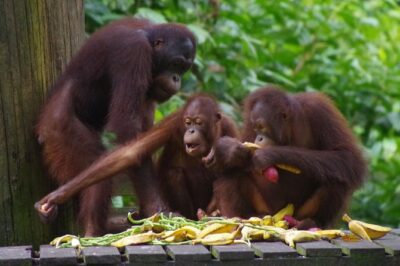
Private Full Day Sepilok Orang Utan, Bornean Sun Bear and Rainforest Discovery Center Tour
Read our review →

Bukit Merah Orang Utan and Penang City Private Tour
Read our review →
Labuk Proboscis, Sepilok, Sun Bear, Sandakan City Tour & Lunch
Read our review →Browse the lists this tour appears in